Art & Technology
The intersection of art and technology represents one of the most dynamic frontiers in contemporary culture. No longer confined to traditional canvases or static sculptures, modern creative expression is increasingly defined by algorithms, mechatronics, and mixed reality. This convergence is fundamentally altering how concepts are prototyped, how intellectual property is protected, and how audiences interact with cultural artifacts.
For artists, designers, and creative agencies, mastering these digital tools is no longer a futuristic luxury but a foundational requirement. Whether it involves integrating augmented reality overlays into a gallery space, writing generative code to streamline industrial design, or linking a physical masterpiece to an immutable digital ledger, the technological toolkit available to creatives is vast. This resource explores the core pillars of technological art, providing the essential knowledge required to navigate its mechanical, ethical, and commercial landscapes.
Generative Algorithms and the Evolution of Digital Aesthetics
The introduction of machine learning and procedural generation has revolutionised the initial phases of the creative process. By automating aesthetic iterations, creators can explore thousands of structural variations in a fraction of the time it would take a human designer.
Streamlining Prototyping in Industrial Design
Generative code is fundamentally reshaping manufacturing workflows. By feeding specific parameters into algorithmic design tools, agencies can reduce initial prototyping phases significantly. However, this reliance on automation introduces new challenges. A common parameter input mistake can easily lead to structurally unviable 3D prints. To prevent material waste and ensure structural integrity, human designers must know exactly when to override machine-generated industrial concepts. The ideal workflow is a symbiotic relationship where algorithms handle rapid aesthetic iteration, whilst human experts refine the mechanical viability.
Navigating Copyright and Ethical Dataset Sourcing
As creative agencies increasingly adopt generative neural networks, establishing clear authorship and navigating intellectual property laws has become critically important. Training proprietary visual datasets often places studios in legally ambiguous territory. Scraping public art portfolios without consent exposes tech startups and creative agencies to severe legal repercussions and voids liability insurance during new pitches.
To build an ethically sourced image database for internal AI training, studios should follow these core principles:
- Prioritise opt-in contributor datasets or verified public domain archives over indiscriminate web scraping.
- Maintain exhaustive prompt documentation to substantiate claims to copyright when registering AI-assisted artworks with intellectual property offices.
- Conduct regular software audits to prevent accidental AI plagiarism within the design team.
- Verbally disclose AI assistance during formal client pitches to maintain consumer trust and professional transparency.
Augmented Reality: Redefining the Museum Experience
Digital overlays have transformed passive gallery viewing into an interactive, multi-dimensional experience. Smartphone AR experiences significantly increase museum dwell time by revealing hidden layers of context, anchoring 3D animations directly to oil paintings without altering the carefully calibrated gallery lighting.
Overcoming Technical Friction for Visitors
Despite its visual appeal, the successful implementation of AR in cultural spaces hinges on user experience. A major hurdle is the software bloat problem, which rapidly drains visitor batteries during digital tours. Curators must often choose between developing dedicated app downloads or utilising web-based AR. While dedicated applications offer superior rendering capabilities, web-based AR guarantees far higher engagement rates due to its frictionless, instant-access nature. Striking the balance between visual fidelity and device performance is the key to a successful digital exhibition.
Kinetic Sculptures and Precision Engineering
Moving art bridges the gap between sculptural aesthetics and advanced mechatronics. Achieving exact geometric symmetry in large-scale kinetic pieces requires an uncompromising approach to precision engineering, where even micro-millimetre miscalculations can cause catastrophic motor failure.
The Mechanics of Movement
Building structurally sound kinetic installations demands rigorous material science. A common weight distribution error can easily snap delicate aluminium support struts. For outdoor exhibitions, selecting between CNC machined parts and hand-tooled joints will dictate the lifespan of the artwork against the elements. Furthermore, programming microcontrollers to synchronise multiple rotational axes requires pristine coding.
Before unveiling a kinetic piece to the public, a rigorous final calibration check is mandatory. This process should follow a strict hierarchy:
- Verify the structural load-bearing capacity of all stationary support mounts.
- Run a low-speed diagnostic to test the synchronisation of all programmed microcontrollers.
- Perform a full-speed stress test to identify any microscopic imbalances in the rotational axes.
Procedural Branding: The Rise of Dynamic Identities
In the digital realm, static marks are rapidly being replaced by dynamic algorithmic logos. Brands are leveraging code-based randomness to generate unique identity variations tailored to different platforms and user interactions.
Balancing Randomness with Corporate Guidelines
The inherent risk of procedural generation is the unpredictable geometry flaw that can render logos unreadable. To harness the power of dynamic branding safely, developers must meticulously constrain variables so that randomised colours and shapes stay strictly within corporate guidelines. When finalising a procedural brand assets library for client handover, choosing seed-based generation over pure randomness allows for better version control, ensuring that the brand identity remains fluid yet instantly recognisable.
Blockchain Provenance and the Authentication of Physical Art
The art market has long struggled with forgery and provenance verification. Today, immutable digital ledgers provide a cryptographic solution, linking physical canvases to smart contracts. Unlike paper certificates that can easily falter or be forged, blockchain provenance remains permanently verifiable.
Smart Contracts and Immutable Ledgers
Linking a physical artwork to a digital token requires care so as not to damage the artwork itself, often achieved through near-field communication (NFC) tags embedded in the frame. When considering the underlying technology, artists must choose between networks like Ethereum and Polygon, balancing network security with minting costs for physical sculptures. Crucially, galleries must establish clear protocols for when to transfer the authentication token to the new buyer, whilst safeguarding against wallet security flaws that could permanently delete the proof of ownership.
Funding, Pitching, and Exhibiting New Media Projects
Creating highly speculative, non-commercial interactive art is an expensive endeavour, often requiring complex mechatronics and bespoke algorithms. Securing grant funding or academic university partnerships requires artists to master the art of the pitch.
Securing Grants and Communicating Complex Tech
Review boards frequently reject groundbreaking tech-art that lacks a clear audience engagement plan. To secure hardware sponsorships before a festival begins, creators must translate complex mechatronics into plain English for non-technical grant judges. A successful concept paper must do more than showcase pure aesthetic code; it must connect the algorithm to current socio-political issues, proving its cultural relevance. Furthermore, meticulous budgeting is required to avoid errors that fail to account for the high cost of burnt-out microchips or sensor replacements.
Pushing the Boundaries: Cybernetics and Bio-Ethical Art
At the absolute vanguard of art and technology lies bio-art and cybernetic performance, where the human body becomes an extension of the hardware. Integrating robotics into performance art navigates highly sensitive bio-ethical boundaries.
Mitigating Risks in Extreme Performance Art
Whether choosing surface-mounted haptics or subdermal implants to convey a conceptual message, the physical safety of the performer is paramount. Unregulated implant surgeries expose artists to massive health and legal repercussions. During rigorous performances, technical crews must safely isolate bodily fluids from exposed electrical sensors. An infection protocol failure can have devastating real-world consequences, making it an absolute necessity for artists to officially notify paramedics and establish rigorous medical contingencies before commencing any high-risk cybernetic show.
Ultimately, the fusion of art and technology demands a dual mastery: the boundless imagination of the traditional artist, combined with the rigorous, systematic precision of an engineer. By understanding the ethical, technical, and logistical frameworks outlined above, creators can safely and innovatively push the boundaries of modern cultural expression.

Navigating the Bio-Ethical Frontier: A Legal and Medical Guide to Robotic Implants in Performance Art
Integrating robotics into your body for art is not an act of rebellion; it is a high-risk medical procedure with profound legal consequences. Unregulated « back-alley » surgery exposes you to criminal liability for practicing medicine without a license and life-threatening infections…
Lire la suite
A Strategist’s Guide: How to Secure UK Grant Funding for Speculative, Non-Commercial Interactive Art
Securing grant funding for brilliant but non-commercial tech-art is consistently rejected not on artistic merit, but on the failure to translate radical experimentation into the funder’s language of public value and risk management. Your application’s success depends on reframing your…
Lire la suite
How to Pitch Cutting-Edge New Media Projects to Major European Tech-Art Symposiums?
Success in the tech-art world isn’t about having the most innovative algorithm; it’s about framing your work as a vital tool for critical inquiry. Juries for major symposiums systematically reject projects that are purely aesthetic or technological showcases, favouring work…
Lire la suite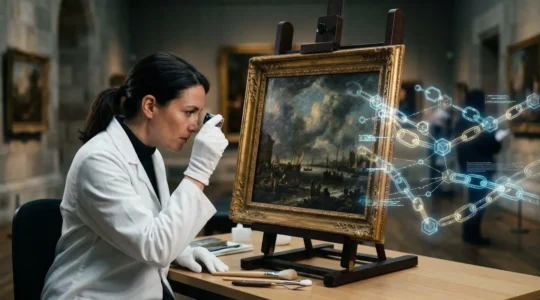
How to Secure Physical Art Authenticity with an Immutable Digital Ledger
Securing a physical artwork with a blockchain ledger is not a one-time event but the start of a rigorous digital asset management lifecycle. The integrity of your proof of ownership depends on a secure physical link, robust wallet security, and…
Lire la suite
Safely Integrating AI into UK Ad Campaigns: A Director’s Guide to Legal & Reputational Risk
Failing to document your AI process isn’t just a creative oversight; it’s a direct threat to your agency’s liability insurance and client trust. The primary risk lies not in AI tools themselves, but in using open-source models without indemnification and…
Lire la suite
How to Leverage Code-Based Randomness to Generate Unique Brand Identity Variations
Generative branding isn’t about creating infinite options; it’s about architecting a robust system of controlled variability to ensure every output is both unique and recognisably on-brand. Define an immutable brand core (the « invisible skeleton ») before writing any code to guide…
Lire la suite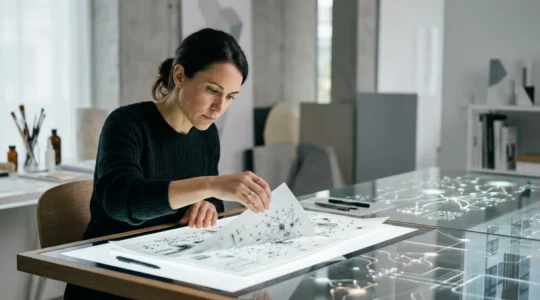
AI & UK Copyright Law: A Solicitor’s Guide to Protecting Commercial Artwork
For UK commercial artists, relying on prompt engineering alone for copyright protection is a legal fallacy; only a meticulously documented ‘Chain of Creation’ demonstrating substantial human authorship can secure your intellectual property. Copyright protection is not granted to raw AI…
Lire la suite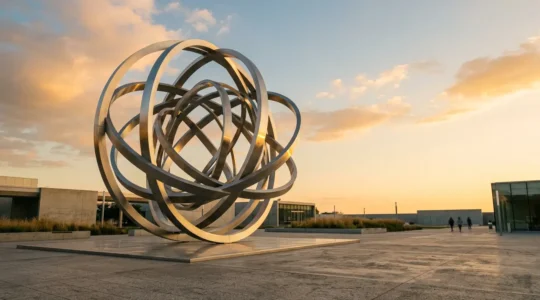
How to Achieve Exact Geometric Symmetry in Large-Scale Kinetic Sculptures?
Achieving flawless kinetic symmetry is not an artistic aspiration but a non-negotiable engineering mandate; success depends on treating the sculpture as an interdependent system where micro-scale precision dictates macro-scale behaviour. In large-scale works, minuscule geometric or timing errors do not…
Lire la suite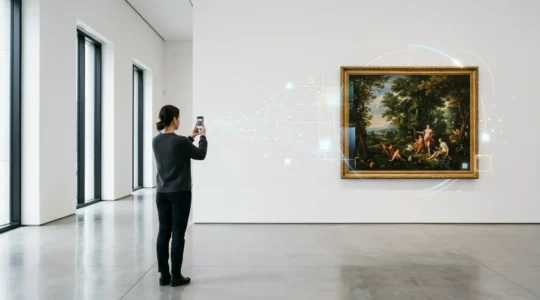
How to Integrate Augmented Reality Overlays into Traditional Canvas Displays?
In summary: Successful AR integration focuses on storytelling and enhances the original artwork rather than creating a digital gimmick. Technical choices must prioritize a frictionless visitor experience, considering battery life, accessibility (WebAR vs. app), and intuitive interaction. Non-invasive methods like…
Lire la suite
How to Train Proprietary Visual Datasets Without Violating UK Copyright Laws?
Training visual AI models in the UK without a robust copyright compliance framework is not a calculated risk; it is a direct path to litigation and invalidation of your intellectual property. Scraping public images, even from portfolios, constitutes copyright infringement…
Lire la suite