Media & Digital Art
Media and digital art represent a profound shift in how we create, curate, and consume cultural experiences. Far from simply replacing traditional canvases with screens, this discipline merges artistic expression with cutting-edge technology to create deeply interactive, spatial, and multi-sensory environments. As galleries and creators increasingly embrace virtual realms, the boundaries between physical installations and digital ecosystems continue to blur, offering unprecedented opportunities for audience engagement.
However, this rapid technological integration brings a unique set of challenges. Curators must now navigate complex hardware decisions, artists are tasked with mastering intricate software pipelines, and archivists face the daunting reality of rapid digital obsolescence. Whether you are looking to design inclusive sensory installations, optimise interactive web galleries, or implement a long-term preservation strategy, understanding the technical and curatorial nuances of this field is essential for success.
Crafting Immersive Virtual and Spatial Exhibitions
The transition from physical galleries to virtual spaces requires more than just digitising artworks. Creating compelling spatial digital experiences involves a delicate balance of hardware capabilities, user comfort, and sustainable financial models.
Overcoming Hardware and UX Challenges in VR
A central dilemma for digital curators is choosing between tethered PC VR and standalone headsets. While tethered systems offer the sheer processing power needed to render hyper-realistic, complex volumetric environments without dropping frames, they introduce severe cable management disasters that create trip hazards in darkened rooms. Conversely, standalone headsets provide unparalleled freedom of movement but often struggle with sustained audience retention if the visual fidelity is compromised to maintain performance.
Furthermore, poor virtual reality design can physically alienate visitors. The motion sickness trigger that forces users to abandon VR installations is frequently tied to latency issues or artificial locomotion methods that conflict with the user’s physical equilibrium. To mitigate this, successful exhibitions prioritise 1:1 room-scale tracking and avoid forced camera movements.
Monetising Spatial Experiences Effectively
Transforming virtual galleries into financially viable ventures requires strategic planning. Figuring out how to monetise these experiences often hinges on ticketed virtual shows. To price virtual admission tickets competitively—particularly for discerning UK audiences—institutions must offer value beyond what a user could experience through a standard web browser. This includes live guided tours, interactive elements, and exclusive access.
- Tiered Ticketing: Offering basic virtual admission alongside premium packages that include downloadable extensions for virtual shows.
- Strategic Release Timing: Releasing downloadable content or expanded gallery wings at optimal times mid-exhibition to revitalise audience interest.
- Hybrid Models: Blending physical sculptures with digital projections without forcing users to wear headsets, thereby engaging casual audiences who may be hesitant to adopt wearable technology.
Inclusive Design for Multi-Sensory Installations
Digital art has the power to engage all the senses, but this multi-sensory approach must be carefully calibrated. Designing hybrid physical-digital shows for non-technical museum-goers requires an acute awareness of varying physical and cognitive needs.
Designing for Neurodiversity and Sensory Sensitivities
When constructing multi-sensory interactive installations, neurodiverse audiences must be a primary consideration. Overstimulation is a common pitfall in busy, technology-heavy galleries. Implementing haptic feedback floors can actually calm overstimulated visitors by grounding them with predictable, rhythmic physical sensations amidst a chaotic audio-visual environment.
Similarly, curators must balance olfactory elements to enhance immersion without triggering asthma or allergies, relying on hypoallergenic, synthetic compounds distributed through highly controlled HVAC systems. Lighting and sound also play critical roles. The high-contrast lighting error—often caused by rapid strobe effects or intense digital projections—can actively exclude visitors with visual processing issues. To ensure deeper art comprehension, institutions often debate between ambient soundscapes and complete silence. Providing both through dedicated, scheduled quiet hours ensures that sensory-sensitive individuals can experience the installation comfortably.
Bridging the Physical-Digital Divide Safely
For older demographics or non-technical visitors, complex controller buttons can immediately frustrate users, breaking the immersion. Employing passive video projections or intuitive interactive touchscreens often engages casual audiences longer than demanding interfaces. Furthermore, gallery attendants should be trained to know exactly when to intervene to help a struggling user with the tech, ensuring assistance is offered before frustration sets in.
Mastering Digital Creation and Live Theatrical Production
Behind every digital exhibition lies a complex creative process. The tools used by digital artists and theatrical set designers have evolved to mimic, and in some cases surpass, traditional mediums.
Advancements in Digital Illustration Workflows
In commercial digital illustration, the pursuit of realism is ongoing. Replicating authentic oil paint textures relies heavily on custom pressure-sensitive brushes that dramatically improve digital realism by responding accurately to stylus tilt and pressure. Artists painstakingly layer blending modes to mimic traditional canvas glazing techniques, creating depth and luminosity.
However, technical bottlenecks frequently disrupt the creative flow. A common issue is the high-resolution canvas mistake, which can easily crash entry-level drawing tablets. Artists must learn when to flatten complex layer hierarchies to save processing power without destroying their non-destructive workflows. Additionally, creators frequently weigh the cost-effectiveness of subscription software versus one-off purchase raster apps, balancing ongoing costs against access to the latest rendering engines.
Transforming Live Theatrical Set Design
Digital art tools are increasingly revolutionising live UK theatrical productions. By creating volumetric stage designs and employing spatial VR sketching, directors can visualise spatial dynamics instantly, which has been shown to reduce set construction costs by up to 30%. However, this workflow is not without pitfalls.
- Scale Calibration: Designers must avoid scale calibration flaws that make VR sets incompatible with real stages, ensuring a strict 1:1 metric translation.
- Exporting Assets: Knowing how to export spatial paintings into usable formats for theatre lighting desks is crucial for synchronising digital backdrops with physical stage lighting.
- Rehearsal Integration: Directors must strategically decide when to invite actors to rehearse within the virtual set to familiarise them with real-time VR projections versus pre-rendered backdrops, ultimately enhancing live acting.
Optimising 3D Assets for Web-Based Galleries
As accessibility becomes a priority, rendering 3D digital art directly within web browsers is essential. However, optimising 3D spatial files for seamless integration into web galleries requires rigorous technical discipline to avoid performance bottlenecks.
Balancing Visual Fidelity and Web Performance
A frequent cause of browser crashes on mobile devices is the use of uncompressed polygon meshes. Web optimisation requires artists to decimate high-poly sculptures to an acceptable polygon count while preserving the silhouette. Furthermore, complex lighting textures must be baked directly into the model’s texture maps to significantly reduce real-time rendering loads on the user’s device.
Technical artists must also navigate rendering quirks, such as the material node error that inexplicably turns transparent glass assets opaque online. This usually stems from incompatible alpha-blending settings between desktop authoring software and web rendering engines. When publishing these assets, developers must choose between WebGL native platforms, which generally reach a wider audience due to seamless browser support, and embedded plugins that might offer higher fidelity but introduce friction for the end-user.
The Critical Challenge of Digital Art Preservation
Perhaps the most pressing issue in the realm of media and digital art is its ephemeral nature. Unlike oil paintings that can survive centuries in a climate-controlled vault, born-digital works are in constant danger of being lost to technological obsolescence.
Combating Hardware and Software Obsolescence
Formulating a long-term archival strategy for unstable interactive art is akin to building on shifting sands. Operating system updates can instantly kill custom-coded digital installations, and the reliance on proprietary video codecs practically guarantees the eventual erasure of digital masterpieces when the parent companies cease support. Archiving is not just about storage; it is about functionality.
- Emulation vs. Re-coding: Institutions frequently debate whether re-coding an artwork from scratch or relying on pure emulation better preserves the artist’s original intent. Emulation generally maintains the authentic feel, while re-coding ensures modern compatibility.
- Virtual Machines: Building a virtual machine to safely run decades-old generative art programs is often the only way to experience early digital art as intended.
- Format Migration: Knowing how to migrate interactive Flash projects onto modern emulation platforms is crucial to prevent the loss of native digital art when legacy software formats become completely obsolete.
Hardware failures are equally catastrophic. The hard drive storage flaw can cause silent data corruption over a decade. To survive institutional bankruptcies and hardware degradation, museums must weigh physical LTO tape backups against enterprise cloud redundancy. Crucially, curators must identify the critical moment to transfer files before the original hardware dies, often recording video screen captures as a final, failsafe backup for inevitable code failure.
Archiving Generative Art and Cloud Taxonomy
Live generative art presents unique preservation challenges. Because these artworks are algorithmically driven, uncapped frame rates on modern hardware can destroy the intended speed and rhythm of vintage generative pieces. To ensure algorithmic randomness can be accurately recreated, archivists must rigorously document seed values. Furthermore, any external API oversight can completely break live artworks when an internet connection drops or an external data source changes.
Finally, storing these massive files requires impeccable organisation. Poor metadata tagging systems can render massive digital collections completely unsearchable. Implementing robust cloud taxonomy systems and standardising file naming conventions across multiple curatorial departments is vital. Curators must rely on enterprise cloud storage for faster retrieval while avoiding bulk upload flaws that overwrite critical provenance data, ensuring these digital masterworks remain accessible for generations to come.
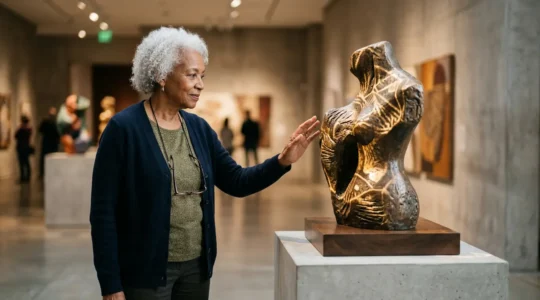
How to Design Hybrid Museum Exhibits That Captivate, Not Confuse
The key to successful hybrid exhibits isn’t the flashiness of the technology, but its ability to create cognitive fluency and emotional safety for every visitor. Complex interfaces that trigger anxiety or fear of failure are the primary reason non-technical visitors…
Lire la suite
A Governance Framework for Implementing Cloud Taxonomy Systems in Large-Scale Digital Museums
The failure of large-scale digital collections stems not from technology, but from a critical lack of administrative governance over digital assets. A robust taxonomy requires standardising data entry protocols across all curatorial departments *before* migration, not after. Implementing automated data…
Lire la suite
How to Preserve Live Generative Art to Function Predictably on Future Systems?
For the computational artist, true digital legacy is not achieved by simply saving source code. It requires a rigorous, code-centric philosophy to neutralize future computational entropy. This guide provides a mathematical and strategic framework for preserving live generative artworks by…
Lire la suite
How to Prevent the Loss of Native Digital Art When Software Formats Become Obsolete?
The irreversible loss of born-digital art is not a matter of ‘if’ but ‘when,’ caused by the decay of its software ecosystem, not just file corruption. Operating system updates break critical hardware and software dependencies, rendering custom-coded art inert. Preservation…
Lire la suite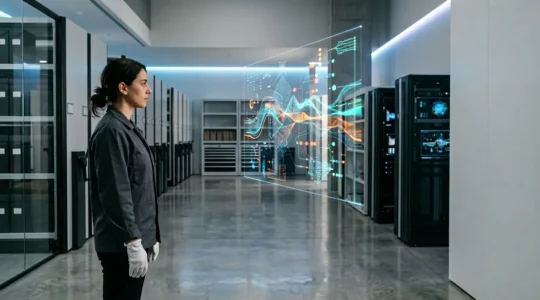
How to Formulate a Long-Term Archival Strategy for Unstable Interactive Art?
The preservation of digital art is not a passive act of storage but an active process of managing inevitable decay through self-sufficient « preservation arks ». Proprietary formats and consumer-grade storage are guaranteed failure points, necessitating a shift to open standards and…
Lire la suite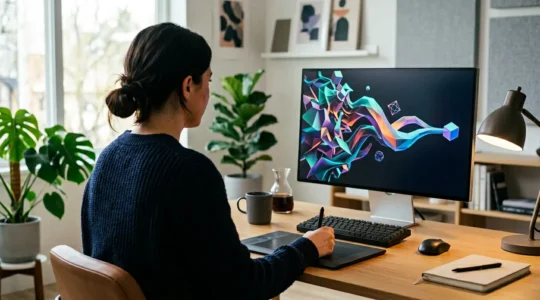
How to Optimise 3D Spatial Files for Seamless Integration into Web Galleries?
High-poly art belongs in galleries, not the browser crash log. Achieving seamless web performance requires a shift from artistic idealism to ruthless, hardware-level optimisation. Performance isn’t about polygon count alone; it’s about the total GPU instruction pipeline and strict adherence…
Lire la suite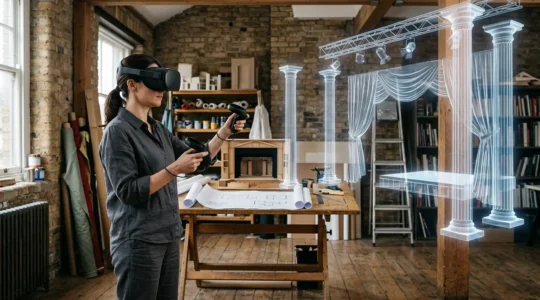
How to Create Volumetric Stage Designs for Live UK Theatrical Productions?
Spatial VR sketching allows theatre designers to translate their hand-drawn artistry into accurate, volumetric models, reducing construction costs and enhancing creative collaboration. It solves the critical scale-to-stage problem through the « Digital Twin » imperative, ensuring 1:1 accuracy. It streamlines technical workflows…
Lire la suite
How to Replicate Authentic Oil Paint Textures in Commercial Digital Illustration?
Contrary to popular belief, achieving an authentic oil paint look isn’t about finding the perfect brush pack; it’s about mastering the physics of digital paint behavior. Custom pressure curves and brush engine settings are more critical than the brush tip…
Lire la suite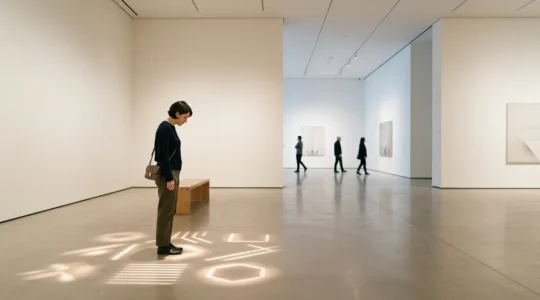
How to Design Multi-Sensory Interactive Installations for Neurodiverse Audiences?
Truly inclusive design for neurodiverse audiences isn’t about sensory removal, but about providing sensory agency. Effective installations are modulable environments, allowing users to adjust light, sound, and interaction levels. Success lies in offering a spectrum of sensory experiences, from calming…
Lire la suite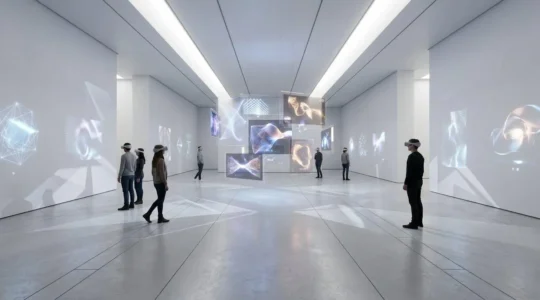
How to Monetise Spatial Digital Art: A Practical Guide to Ticketed Virtual Shows
The key to monetizing digital art isn’t high-end VR exclusivity, but a scalable web-based experience that funnels users towards premium content. Prioritise a browser-based (WebGL) gallery for maximum accessibility and audience reach without downloads or special hardware. Implement tiered pricing…
Lire la suite