Blog
The intersection of art, culture, and economics forms a complex ecosystem that extends far beyond the walls of a gallery or the stage of a theatre. Historically, the assumption was that cultural initiatives were primarily a drain on public resources, requiring constant civic subsidies simply to survive. However, modern economic analyses have flipped this narrative entirely. Today, strategically directed regional arts funding is widely recognised as a powerful catalyst for local economic development and urban revitalisation.
Whether examining the increased footfall generated by a new creative hub or the subtle, cascading shifts in property values surrounding a newly announced museum, the relationship between artistic endeavour and commercial success is undeniable. By treating cultural projects not merely as civic amenities but as active economic engines, communities can unlock sustainable growth. This comprehensive overview explores the multifaceted financial footprint of the arts, providing local councils, medium-sized enterprises, and property investors with the insights needed to navigate the cultural economy.
The Tangible Link Between Cultural Hubs and Local Economies
Cultural venues act as powerful gravitational centres within both urban and regional landscapes. Just as a major anchor tenant in a retail park draws consumers who subsequently visit smaller surrounding boutiques, a strategically placed cultural institution brings visitors who inject capital directly into the immediate vicinity.
Driving Footfall for Neighbouring Retailers
When a regional arts centre hosts a premiere, a highly anticipated exhibition, or a community workshop, the economic ripples are felt by the entire high street. Visitors rarely consume culture in complete isolation. A trip to a gallery or theatre usually involves auxiliary spending: a coffee beforehand, a restaurant meal afterwards, and perhaps some spontaneous retail shopping in nearby independent stores.
To fully grasp this symbiotic relationship, it is helpful to categorise the financial influx into three distinct streams:
- Direct spending: Purchases made immediately within the cultural venue itself, such as box office ticket sales, exhibition catalogues, and gift shop revenue.
- Indirect spending: The vital capital injected into neighbouring businesses, including local transport networks, hospitality venues, and independent retail shops that benefit from the increased footfall.
- Induced impact: The subsequent, broader wave of spending by local employees and suppliers whose wages and contracts are supported by the initial influx of cultural visitors.
Understanding these interconnected layers helps local retailers strategically tailor their services, opening hours, and promotions to align with major cultural schedules, creating an environment where both the arts venue and the commercial sector thrive harmoniously.
Tourism Spend: Permanent Installations vs. Temporary Festivals
When municipalities look to attract domestic and international tourist capital, they are frequently tasked with weighing the merits of building lasting cultural infrastructure against the appeal of hosting ephemeral, time-limited events. Both strategies serve distinct economic purposes and attract different types of spending.
Temporary arts festivals—such as light biennials, fringe theatre weeks, or pop-up architectural pavilions—create a rapid, highly concentrated influx of tourists. These vibrant events often generate an immediate and lucrative spike in local hospitality bookings and short-term retail revenue. However, they also require intense logistical planning, can temporarily strain local infrastructure, and offer an economic boost that dissipates as soon as the festival concludes.
Conversely, permanent installations—such as a landmark outdoor sculpture park, a repurposed industrial gallery, or a dedicated national museum—offer a slow but remarkably steady stream of year-round visitors. While the initial capital expenditure and construction costs are significantly higher, permanent cultural assets provide essential long-term stability for the local tourism sector. They encourage gradual, sustainable commercial development and give new hospitality businesses the confidence to invest in the area.
Corporate Art Sponsorship: Beyond Traditional Philanthropy
For decades, many business leaders viewed art sponsorship as a purely philanthropic exercise—a noble way to give back to the community with very little expectation of a tangible financial return. Currently, the landscape has shifted dramatically. Corporate support for the arts is now deployed as a highly strategic, multifaceted marketing tool that offers measurable commercial dividends.
Calculating the Return on Investment (ROI) for Enterprises
For medium enterprises operating with careful financial oversight, justifying the budget for a cultural partnership requires a robust and clear methodology. The ROI of corporate sponsorship is no longer an abstract concept but a deeply quantifiable metric. To accurately measure this return and justify the expenditure to stakeholders, businesses typically follow a structured evaluation process:
- Establish baseline metrics: Before the cultural partnership officially begins, companies must record their current brand awareness levels, general customer engagement rates, and baseline sales figures to serve as a point of comparison.
- Track direct lead generation: Marketing teams implement specific tracking mechanisms, such as unique promotional codes, dedicated digital landing pages, or exclusive VIP event invitations that are linked directly to the arts sponsorship.
- Quantify media equivalent value: Analysts calculate the commercial cost of the organic press coverage, public relations mentions, and social media reach generated by the partnership, comparing it directly to standard advertising purchasing rates.
- Survey audience sentiment: Post-campaign, businesses measure the qualitative shift in brand perception and trust among the cultural venue’s specific demographic.
By systematically analysing these critical data points, forward-thinking companies can definitively demonstrate how aligning their brand with a respected cultural institution enhances their market position and ultimately drives long-term revenue.
Enhancing Brand Value and Client Retention
Beyond direct consumer lead generation, cultural partnerships offer unparalleled opportunities in the business-to-business (B2B) sector. Sponsoring a major regional gallery exhibition or a prestigious local theatre production provides medium enterprises with unique, high-value environments for client entertainment.
Hosting key stakeholders at private exhibition viewings or gala premieres fosters a level of relationship-building that traditional corporate dinners simply cannot match. This association with creativity, cultural enrichment, and community support significantly elevates the company’s prestige, aiding not only in retaining crucial clients but also in attracting top-tier employee talent who value corporate social responsibility.
Urban Regeneration and the Complex Real Estate Landscape
The phenomenon where a striking piece of cultural architecture actively revitalises a declining, post-industrial neighbourhood is widely documented globally. Cities continually attempt to replicate this success, often using large-scale art projects as a catalyst for sweeping urban renewal and economic turnaround.
How Major Gallery Announcements Impact Local Property Prices
The mere public announcement of a significant new cultural development can send immediate shockwaves through the local real estate market. Property investors, developers, and prospective home buyers are acutely aware of the lifestyle benefits, enhanced public prestige, and subsequent civic infrastructure improvements that inevitably accompany a major gallery or concert hall.
Typically, property prices in the affected postal codes experience a distinct, three-phase timeline of appreciation. An initial speculative spike occurs immediately following the official project confirmation and funding approval. As construction progresses and the physical structure visually alters the skyline, property values often stabilise as the market absorbs the new reality. Finally, a second, more sustained wave of price growth emerges once the venue officially opens. This final phase is usually driven by the anticipated neighbourhood gentrification, which brings artisanal cafes, boutique fitness studios, and independent shops into the formerly overlooked area.
Avoiding the Regeneration Myth for City Councils
Despite the highly publicised success stories, treating art solely as a blunt instrument for urban regeneration carries significant financial risks. City councils sometimes fall into the perilous trap of funding visually spectacular but socially disconnected projects. These expensive developments often look highly impressive on architectural renders but fundamentally fail to resonate with the daily realities of the existing local community.
When a subsidised cultural project lacks genuine grassroots support and cultural relevance, it inevitably struggles to generate the consistent footfall required to sustain its high operational costs. This dynamic leads to a vicious cycle of financial deficits, where the local government must continually inject emergency capital simply to keep the venue afloat. To prevent this unprofitable scenario, civic leaders must ensure that cultural investments are deeply integrated into the local social fabric. Prioritising genuine community engagement and accessibility over purely aesthetic or speculative regeneration ensures that the project remains a sustainable economic asset rather than a municipal burden.
Ultimately, the economic footprint of the arts is profound, multifaceted, and deeply intertwined with the prosperity of local communities. From significantly boosting the daily revenue of independent high street retailers to shaping the long-term trajectories of property markets, strategic cultural investments are essential drivers of sustainable growth. By moving beyond outdated notions of art as a mere charitable cause, both civic planners and corporate leaders can harness the true potential of cultural economics, creating vibrant, resilient spaces where creativity and commerce flourish side by side.
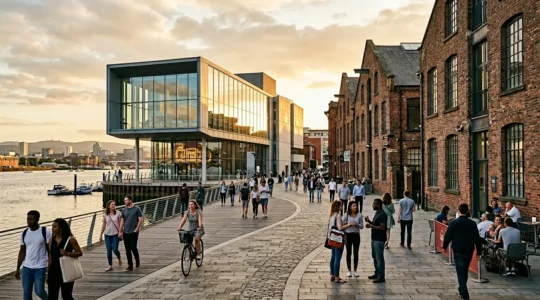
How Does Regional Arts Funding Truly Impact Local Business Revenue in the UK?
Strategic arts funding is not a subsidy but a direct economic catalyst, generating measurable returns in retail footfall, property value, and corporate ROI for UK communities. For every £1 of salary in the arts, an additional £2.01 is generated in…
Lire la suite