Street Art & Urban Art
Long relegated to the shadows of urban infrastructure, the vibrant world of street and urban art has undergone a profound transformation. What was once universally dismissed as mere vandalism has organically evolved into one of the most dynamic, influential, and financially significant visual art movements of the modern era. This creative expression serves as a mirror to society, capturing the unfiltered voice of the public while simultaneously reshaping the aesthetic and economic landscape of our cities.
Understanding this movement requires looking beyond the aerosol paint and concrete canvases. It is a complex ecosystem where raw, grassroots rebellion intersects with mainstream gallery spaces and high-end real estate. Whether you are an enthusiast looking to decode the murals in your local neighbourhood, a business owner hoping to inject urban energy into a commercial space, or a collector aiming to understand market valuations, navigating this space requires both cultural sensitivity and an eye for authenticity.
This comprehensive exploration will demystify the core pillars of urban art. We will examine the delicate balance between unsanctioned guerrilla expression and subsidised public works, uncover the mechanisms that drive the sudden appreciation of grassroots murals, and explore the intricate journey an artist takes when transitioning from the street corner to the prestigious white walls of the fine art market.
The Cultural Divide: Subsidised Walls Versus Guerrilla Tags
At the heart of urban art lies a persistent debate regarding legitimacy and cultural value. The environment in which a piece is created fundamentally alters its reception, its meaning, and its overall cultural cachet within the community.
The Raw Energy of Unsanctioned Graffiti
Unsanctioned graffiti, often referred to as guerrilla tagging, represents the most primal form of urban expression. Because these works are created illegally, often under the cover of darkness, they possess an inherent urgency and risk. This risk is precisely what grants them immense credibility within the subculture. The artists are not painting to please a committee; they are claiming space and asserting their existence in a metropolitan environment that often ignores the marginalised.
Guerrilla tags act much like a visual dialect. To the untrained eye, they might appear chaotic, but within the graffiti community, they are a complex language of typography, territory, and skill. This unfiltered medium retains a high level of cultural authenticity because it exists entirely outside the traditional mechanisms of commercial approval.
Legal Murals and Community Spaces
Conversely, the rise of subsidised graffiti walls and city-sanctioned mural projects has democratised the medium, making it more accessible to the general public. These legal spaces allow artists to execute massive, highly detailed pieces that require days of uninterrupted work—a luxury impossible in unsanctioned environments.
While subsidised walls dramatically improve neighborhood aesthetics and reduce urban blight, purists sometimes argue they dilute the rebellious spirit of the art form. However, these legal frameworks provide a crucial testing ground for emerging artists, allowing them to refine their techniques, build a public portfolio, and transition toward sustainable careers without the constant threat of legal repercussion.
Navigating the Commercialisation of Street Culture
As urban art has gained mainstream popularity, the corporate world has inevitably sought to harness its edgy, youthful energy. However, blending corporate interests with grassroots culture is a delicate operation fraught with potential missteps.
Avoiding the Corporate Authenticity Trap
The most common failure in commercialising this medium is the authenticity trap. This occurs when corporations attempt to mimic street culture without genuinely engaging with the artists or the community. When a brand commissions a sterile, overly-branded mural that merely imitates the aesthetic of graffiti, the public—particularly the youth demographic—can instantly spot the insincerity. Such attempts often backfire, resulting in local backlash or the mural being swiftly defaced by local writers.
To successfully integrate street art, businesses must act as patrons rather than dictators. The key is relinquishing absolute creative control and allowing the artist’s genuine voice to shine through, creating a symbiotic relationship rather than a purely transactional one.
How to Commission a Local Graffiti Artist for Commercial Spaces
Commissioning an urban artist for an office front or retail space requires a structured yet flexible approach. Following a respectful process ensures both the business and the artist achieve a spectacular result.
- Research local talent: Spend time identifying artists whose existing style naturally aligns with your brand’s ethos. Do not ask an abstract geometric artist to paint realistic portraits.
- Establish clear parameters: Define the physical boundaries, the budget, and the overarching theme, but leave the artistic execution to the professional.
- Draft a comprehensive agreement: Ensure contracts cover intellectual property rights, maintenance responsibilities (such as applying anti-graffiti coatings), and timelines.
- Facilitate a safe environment: Provide the necessary equipment, such as scaffolding or scissor lifts, and ensure all local council permits are secured before the first coat of paint is applied.
The Financial Evolution of Grass-Roots Urban Art
The financial trajectory of street art is perhaps one of the most fascinating phenomena in the contemporary art world. Pieces that cost nothing but the price of spray paint can suddenly command staggering valuations, transforming local economies and real estate markets.
Why Unsanctioned Murals Suddenly Appreciate in Value
The spontaneous appearance of a high-quality mural by an anonymous or locally revered artist can trigger an immediate economic ripple effect. A prime example can be seen in the vibrant streets of Bristol, where unsanctioned murals have historically turned ordinary brick walls into lucrative cultural landmarks.
This sudden value appreciation is driven by scarcity and narrative. An illegal piece is inherently temporary; it could be painted over by the council or tagged over by rivals the very next day. This ephemeral nature creates intense public interest. When a piece survives and gains media traction, it transitions from vandalism to local heritage, subsequently elevating the property value of the building it adorns and increasing foot traffic for surrounding businesses.
Spotting Emerging Talent Before Mainstream Adoption
For collectors and art enthusiasts, identifying profitable grass-roots urban art before it reaches mainstream galleries requires keen observation. Investing early in a niche artist is much like discovering an indie band before they sign to a major record label.
- Look for high frequency and consistent evolution in their street pieces, indicating dedication and a maturing style.
- Monitor grassroots community engagement; artists who command respect from their peers usually have stronger long-term potential.
- Attend independent zine fairs, underground exhibitions, and local print releases to acquire early, affordable works.
- Observe their transition into alternative mediums, such as screen printing or canvas work, which signals a readiness for the commercial market.
Crossing the Threshold: From the Streets to Fine Art
The ultimate transition for many urban creators is the journey from the unpredictable street environment into the structured world of the fine art market. This transition is rarely instantaneous and requires navigating complex industry milestones.
Milestones of Gallery Representation
A niche urban artist officially transitions into the fine art realm when their work is validated by established institutional frameworks. This shift is typically marked by their inclusion in curated group shows, followed by a solo exhibition in a recognised gallery. Furthermore, when an artist’s work begins appearing in secondary market auctions rather than just direct-to-buyer sales, it signals a solidified financial baseline and serious collector interest.
Preserving Street Credibility in the White Cube
The greatest challenge during this transition is maintaining the raw essence that made the artist compelling in the first place. When moving into a gallery—often referred to as the white cube—artists must adapt their medium. Spray paint behaves differently on canvas than on porous concrete. The most successful artists manage to translate the scale, texture, and socio-political commentary of their outdoor work into indoor formats without compromising their original message.
Street and urban art represent a living, breathing cultural dialogue. By understanding its complex layers—from the rebellious origins of guerrilla tags to the sophisticated dynamics of gallery representation—we can better appreciate how these vibrant urban interventions continuously redefine the boundaries of contemporary art.
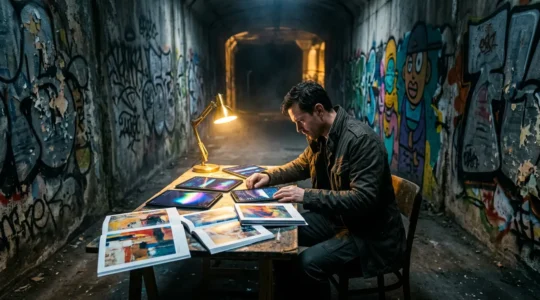
How to Spot and Invest in Grass-Roots Urban Art Before It Blows Up
The real money in urban art isn’t found in sterile galleries; it’s made by executing ‘cultural arbitrage’—spotting an artist’s authentic street credibility before the mainstream market prices it in. Value originates from unsanctioned work that survives, earning a « survival premium »…
Lire la suite