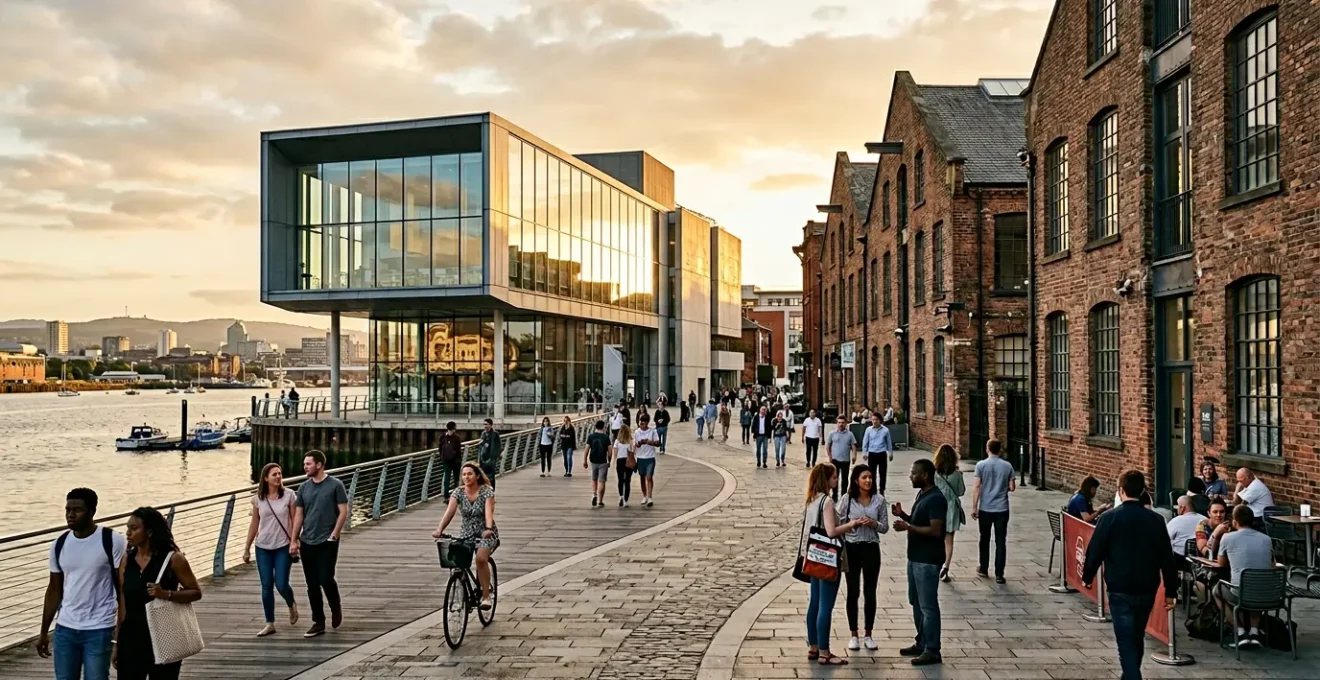
Strategic arts funding is not a subsidy but a direct economic catalyst, generating measurable returns in retail footfall, property value, and corporate ROI for UK communities.
- For every £1 of salary in the arts, an additional £2.01 is generated in the wider economy through a powerful multiplier effect.
- Cultural projects can offer a return of up to £33 in economic impact for every £1 invested, significantly outperforming traditional marketing.
Recommendation: Shift the debate from ‘if’ we should fund the arts to ‘how’ we can strategically invest in projects that deliver the highest economic spillover for local businesses.
For any local council member or regional business owner in the UK, the debate around arts funding often feels circular. It’s frequently positioned as a choice between “nice-to-have” cultural amenities and “essential” business infrastructure. The conversation defaults to vague notions of “vibrancy” and “community well-being,” which, while important, are difficult to quantify on a balance sheet. The standard arguments suggest that cultural events bring in tourists and improve a town’s image, but they rarely address the core question a pragmatic leader asks: what is the tangible, measurable return on this investment for the existing businesses in my area?
This perspective often overlooks a crucial mechanism: the economic spillover effect. The real value of well-managed arts funding lies not just in the cultural sector itself, but in its proven ability to act as a catalyst for the broader local economy. When a subsidised gallery opens or a festival is supported, it doesn’t just create jobs for artists and curators; it creates a ripple effect that boosts footfall for neighbouring shops, increases demand for restaurants, and ultimately enhances commercial property values.
But what if the key isn’t simply funding the arts, but funding them strategically? This analysis moves beyond the platitudes to provide a data-driven framework for local leaders. We will dissect the mechanisms by which cultural investment translates into commercial gain, evaluate the ROI of different investment models, and expose the common pitfalls that lead to unprofitable projects. The goal is to equip you with the economic arguments and evidence needed to make smarter, more profitable decisions about the role of arts and culture in your community’s regeneration.
This article explores the specific economic pathways through which arts funding impacts local businesses. The following sections provide a detailed breakdown of the key factors, from retail footfall and corporate sponsorship to property values and the choice between different types of cultural projects.
Summary: Unpacking the Economic Impact of UK Arts Funding
- Why Do Subsidised Cultural Hubs Increase Footfall for Neighbouring Retailers?
- How to Calculate the ROI of Corporate Art Sponsorship for Medium Enterprises?
- The Regeneration Myth That Traps City Councils in Unprofitable Art Projects
- Permanent Installation or Temporary Festival: Which Drives More Tourist Spend?
- When Do Local Property Prices Spike After a Major Gallery Announcement?
- Why Do Independent Studios Drive Urban Regeneration Faster Than Retail Parks?
- Purpose-Built Centres or Refurbished Heritage Sites: Which Inspires More Youth?
- How Visual Arts Districts Boost Commercial Property Values in Northern UK Cities?
Why Do Subsidised Cultural Hubs Increase Footfall for Neighbouring Retailers?
The primary mechanism by which subsidised cultural hubs boost neighbouring retail is the generation of new and diversified footfall. A destination gallery or theatre doesn’t just attract a single type of visitor; it creates a steady stream of people—tourists, local families, and evening patrons—who then require other services. This concept is known as the economic spillover effect, where spending in one sector directly stimulates activity in others. These visitors need places to park, eat, drink, and shop, transforming a simple cultural trip into a multi-purchase journey that benefits the entire high street.
The data from successful projects across the UK bears this out. The Turner Contemporary gallery in Margate, for example, is not just an art venue; it’s an economic engine. A study by Canterbury Christ Church University revealed it generated a staggering £70 million for the local economy in its first decade. This wasn’t just ticket sales. An analysis of the Edinburgh Festivals’ impact shows precisely where this spillover occurs: 51% of visitor spend is on accommodation, 25% on food and drink, and 19% on shopping. For every person buying a festival ticket, money is simultaneously flowing into local hotels, pubs, and boutiques.
This phenomenon is underpinned by a powerful economic principle: the multiplier effect. As the Centre for Economic and Business Research highlights in their analysis, the value extends far beyond the initial investment. Their findings are a critical tool for any local leader making a case for funding.
For every £1 of salary paid by the arts and culture industry, an additional £2.01 is generated in the wider economy through indirect and induced multiplier impacts.
– Centre for Economic and Business Research, The Value of Arts and Culture to the People and Society
This demonstrates that funding a cultural hub is a direct investment in the entire local business ecosystem. It creates a gravitational pull, drawing in consumer spending that would otherwise not exist and magnifying its value throughout the community.
How to Calculate the ROI of Corporate Art Sponsorship for Medium Enterprises?
For a medium-sized enterprise, the decision to sponsor an arts organisation can seem abstract compared to a digital marketing campaign with clear click-through rates. However, the return on investment (ROI) from arts sponsorship, while different, is highly tangible and can be calculated by looking beyond direct sales. The key is to measure value across four distinct categories: brand enhancement, stakeholder engagement, network development, and direct economic impact. It offers a form of “brand association transfer” where the prestige, creativity, and community-mindedness of the cultural partner become attributes of the sponsoring business.
Unlike traditional advertising, arts sponsorship generates value for employees and B2B partners. Offering staff tickets or hosting clients at a private view provides significant engagement benefits that a billboard cannot. These are not just perks; they are investments in company culture and high-value relationships. Crucially, the overall economic impact often dwarfs that of conventional marketing. The Local Government Association has noted that in 2020, for every £1 of GVA generated in the arts, an additional £1.23 was generated in the wider economy, showcasing a powerful ripple effect that sponsors become part of.
To make a practical comparison, the Arts Council provides a framework that contrasts the returns from arts sponsorship against traditional marketing. This data is invaluable for a finance director questioning the value of supporting a local theatre over a newspaper ad campaign.
| ROI Category | Arts Sponsorship | Traditional Marketing |
|---|---|---|
| Return per £1 invested | £33 economic impact | £3-5 average |
| Employee Engagement | Cultural participation benefits | Limited staff impact |
| B2B Network Value | Private view networking opportunities | Trade show contacts |
| Brand Association Transfer | Cultural prestige attributes | Direct product messaging |
This table clarifies that while traditional marketing is excellent for direct product messaging, arts sponsorship excels at building long-term brand equity, fostering key relationships, and delivering a far greater overall economic contribution to the community a business operates in.
The Regeneration Myth That Traps City Councils in Unprofitable Art Projects
The narrative that a single, grand cultural project will single-handedly revitalise a struggling town is a seductive one, but it is also a dangerous myth. This “build it and they will come” philosophy can trap councils in financially draining, top-down projects that fail to connect with the local community or its economic reality. The risk is that a shiny new arts centre, conceived without a deep understanding of local needs and organic commercial activity, becomes an isolated “cultural island” rather than an integrated catalyst. This results in the worst of both worlds: a drain on public funds and minimal economic spillover for surrounding businesses.
The problem is often one of scale and context. A massive, modernist gallery might look impressive in architectural plans, but if it lands in a town without the supporting transport, hospitality, and retail infrastructure, it can fail to generate the promised footfall. The visual contrast between a gleaming, empty cultural plaza and the struggling, yet authentic, traditional businesses in adjacent streets is a stark reminder of this potential disconnect. This is the paradox of forced regeneration: it can displace or ignore the very economic life it claims to support.
Furthermore, the current financial climate makes these high-stakes gambles even more perilous. The ongoing pressure on local authority budgets means there is no margin for error. As Tony Butler, Executive Director of Derby Museums Trust, pointed out in The Art Newspaper, the situation is critical.
For many, the current funding pressures ‘are worse than they were during Covid’. Museums have been squeezed by ‘a cumulative effect of financial challenges that have existed for nearly a decade now’ as government austerity has pushed England’s local councils to make ‘year-on-year reductions‘.
– Tony Butler, The Art Newspaper – Derby Museums Trust Executive Director
This financial reality necessitates a shift from monolithic, high-risk projects towards more agile, community-embedded, and financially sustainable models of cultural investment that build upon a town’s existing strengths.
Permanent Installation or Temporary Festival: Which Drives More Tourist Spend?
When a council is deciding how to allocate a limited arts budget, a fundamental strategic question arises: is it better to invest in a permanent cultural asset like a gallery or a recurring, high-impact temporary event like a festival? The answer depends entirely on the desired economic outcome. Each model has a distinct profile of tourist spending, and the most successful regional strategies often employ a mix of both. It is a classic case of investment triage, where the choice of project must align with specific economic goals.
Temporary festivals, like the Edinburgh Festival, are masters of creating concentrated economic shockwaves. They generate immense, short-term spikes in spending. For instance, a House of Commons debate noted the Edinburgh Festival generated a £407 million economic impact in 2022 alone. This model is exceptionally effective for the hospitality and retail sectors, which can plan for and capitalise on this predictable annual surge. The drawback is the “boom and bust” cycle; the economic benefit is intense but fleeting, and the town’s infrastructure must be able to cope with the massive, temporary influx.
On the other hand, permanent installations like the Turner Contemporary in Margate offer a different economic advantage: consistency. While they may not produce a single £400 million spike, they provide a steady, year-round driver of tourism and local spending. As noted in an analysis of its architecture, the gallery has “consistently exceeded expected annual visitor numbers” and has been a key factor in the seaside town’s long-term revival. This model is about sustained economic health rather than a short-term injection. It builds place-making value over time, making an area permanently more attractive to visitors, residents, and new businesses.
Ultimately, the choice is not about which is “better” but which is more appropriate for a town’s specific economic objectives. A city with a robust hotel and restaurant sector might benefit more from a festival’s sharp peak, while a town seeking to build a year-round visitor economy and encourage residential investment may find a permanent cultural hub to be the superior long-term catalyst.
When Do Local Property Prices Spike After a Major Gallery Announcement?
The “art effect” on property prices is a well-documented phenomenon, but its timing is often misunderstood. For local business owners and investors, knowing *when* these spikes occur is crucial for strategic planning. The rise in property values does not happen in a single, monolithic wave upon a gallery’s opening. Instead, it follows a predictable three-wave pattern, starting long before the first visitor walks through the door. Understanding this timeline allows for proactive investment rather than reactive scrambling.
The first and most immediate spike is the “Speculator Wave.” This occurs almost immediately after a major project and its funding are officially announced. At this stage, savvy commercial property investors and developers move to acquire land and disused buildings in the vicinity, betting on future appreciation. This initial wave is primarily driven by commercial and land value increases, as the long-term potential of the area is repriced by the market.
The second, slower rise is the “Enabling Wave.” This begins as construction gets underway. This phase sees the arrival of supporting businesses—independent coffee shops, boutique hotels, and restaurants—that anticipate the needs of the future gallery’s visitors and staff. This wave is characterised by a rise in rents for commercial units and a gradual improvement in the area’s amenities, making it a more attractive place to do business. Finally, the “Livability Wave” occurs after the gallery opens and its success becomes established. This is when the broader residential market sees a significant uplift, as the area’s desirability as a place to live is proven. The improved cultural amenities and thriving local economy attract new residents, pushing up house prices and rental demand.
Your Action Plan: Tracking the Three-Wave Property Spike
- The Speculator Wave: Monitor commercial land and property transactions immediately following a major funding announcement to identify the initial investor interest.
- The Enabling Wave: Track new business registrations and commercial letting activity in the 1-2 years leading up to the venue’s opening. This signals the growth of the supporting ecosystem.
- The Livability Wave: Analyse residential house price indices and rental yields in the 12-24 months after the venue opens to measure the impact on the wider community.
As highlighted by analysis on the Turner Museum’s effect on Margate, this can be a double-edged sword for long-term residents, but the “renewed interest in the area has seen increased property values, signifying renewed investor confidence.” For a council or business owner, understanding this timeline is key to maximising the opportunities at each stage.
Why Do Independent Studios Drive Urban Regeneration Faster Than Retail Parks?
The common wisdom of 20th-century urban planning often favoured large-scale, top-down projects like retail parks as drivers of regeneration. However, contemporary evidence from across the UK suggests that fostering a cluster of small, independent artist studios can be a far more potent and authentic cultural catalyst. The reason lies in the difference between imposed and organic growth. A retail park is a closed system designed for a single purpose—commerce. An arts district, by contrast, is an open ecosystem that fosters creativity, collaboration, and unique local identity.
Independent studios act as seeds of regeneration. They colonise and repurpose under-utilised or derelict industrial buildings, bringing life and activity to forgotten corners of a city at a relatively low cost. This “bottom-up” approach creates a textured, authentic character that cannot be replicated by a homogenous retail development. This authenticity becomes a primary asset, attracting not just art buyers but also other creative businesses, tech start-ups, and independent retailers who want to be part of a vibrant and dynamic environment. The result is a diverse, resilient local economy, not a monoculture of national chains.
Manchester’s Northern Quarter is a prime example of this phenomenon. Before it was a destination, it was a collection of dilapidated warehouses. The influx of artists and creative entrepreneurs transformed the area into a thriving hub. As research from the PEC notes, the benefits of such creative clusters align closely with “improving civic pride, levels of investment in and resilience of the local economy, or raising levels of tourism.” This is regeneration from the inside out. The studios create a reason for people to be there, and commerce naturally follows the footfall. A retail park, in contrast, often just relocates existing commerce from the town centre, hollowing out the original urban core.
In essence, retail parks are about consumption, while creative studio districts are about production and experience. The latter creates a unique “sense of place” that becomes a powerful economic driver in itself, fostering a more sustainable and deeply-rooted form of urban regeneration.
Purpose-Built Centres or Refurbished Heritage Sites: Which Inspires More Youth?
Engaging young people is a key objective for many cultural funding programmes, but the choice of venue plays a surprisingly critical role in achieving it. When considering where to invest, councils often face a choice: construct a state-of-the-art, purpose-built youth arts centre, or refurbish a disused heritage building? Both have distinct advantages, and the optimal choice depends on whether the goal is skills development, identity connection, or youth-led programming. There is no one-size-fits-all answer, but understanding the trade-offs is essential.
Purpose-built centres offer a “blank canvas” of aspiration. They can be equipped with the latest technology for digital art, music production, and performance, aligning with future-focused creative industries. These modern, adaptable “black box” spaces can be entirely shaped by youth-led programming, giving young people a sense of ownership and relevance. The flexibility of these venues is their greatest strength, allowing them to adapt to changing trends in youth culture. However, they can sometimes lack a deeper connection to the local identity, feeling like an implant rather than a part of the town’s fabric.
Refurbished heritage sites, on the other hand, offer an immediate and powerful connection to local history and identity. Transforming a derelict mill, church, or warehouse into a vibrant arts space provides a tangible link between the town’s past and its future. This approach offers unique opportunities for skills development in conservation, craft, and history. However, heritage constraints can limit programming flexibility. The challenge, as Mark Davyd of the Music Venue Trust has pointed out, is often securing funding for these smaller, more grassroots heritage projects, even though they can be vital incubators of talent.
The following table, based on factors identified by the Arts Council, summarises the key differences for youth engagement:
| Factor | Heritage Sites | Purpose-Built Centres |
|---|---|---|
| Identity Connection | Authentic local history | Future-focused aspiration |
| Skills Development | Conservation, craft, history | Digital, tech, modern design |
| Youth Ownership | Protected, limited flexibility | Adaptable ‘black box’ spaces |
| Programming Flexibility | Heritage constraints | Youth-led programming |
Ultimately, the most inspiring projects are often those that blend these two approaches—for example, inserting a modern, flexible performance space within the shell of a historic building, thereby gaining the benefits of both authenticity and adaptability.
Key Takeaways
- Arts funding is not a cost but an investment that creates a measurable economic “spillover” into local retail and hospitality.
- The ROI of arts investment can be tracked through specific metrics like footfall, corporate engagement, and property value spikes, which often follow a predictable three-wave pattern.
- Strategic choice is paramount; councils must decide whether to target short-term boosts (festivals) or long-term growth (permanent hubs), and whether to prioritise new builds or heritage refurbishment.
How Visual Arts Districts Boost Commercial Property Values in Northern UK Cities?
The transformation of post-industrial areas in Northern UK cities into thriving visual arts districts provides a powerful case study in modern economic regeneration. Areas like Liverpool’s Baltic Triangle demonstrate that the link between arts and commercial property value is not coincidental; it is causal. The process works by fundamentally changing the perception and utility of a location, turning low-cost, underused industrial space into a high-demand hub for the creative economy. This boosts property values through a combination of increased demand, improved amenities, and enhanced “place-making value.”
Initially, artists are drawn to these areas by low rents and large, flexible spaces. This first wave of “creative colonisation” brings activity and a unique identity. This, in turn, attracts a second wave of occupants: creative and digital businesses (design studios, tech start-ups) who want to be co-located with a pool of talent and a vibrant cultural scene. This influx creates a sharp increase in demand for commercial lets, pushing up rental yields and, consequently, the capital value of the properties. The once-derelict warehouses become premium office spaces. The Baltic Triangle’s journey from a neglected industrial zone to a digital and creative powerhouse is a testament to this model’s success.
This organic growth is a magnet for further investment. As a district’s reputation grows, it attracts developers who build new residential and commercial properties, and the local council is incentivised to improve public realm and transport links. The overall impact is significant. The creative industries are a cornerstone of the UK’s economy, and fostering them at a local level allows cities to tap into this national growth. According to government figures, the creative industries contribute a massive £124 billion of Gross Value Added (GVA) to the UK economy in 2023. By creating environments where these industries can cluster and thrive, Northern cities are directly boosting their commercial property values and building a resilient economic future.
The evidence is clear: when approached as a strategic investment rather than a charitable subsidy, regional arts funding delivers a powerful and quantifiable economic return. From driving retail footfall to increasing commercial property values, the spillover effects create a more resilient and prosperous local economy. The conversation must now shift from questioning the value of the arts to demanding more data-driven, strategic, and accountable funding models that maximise this economic potential for businesses and communities across the UK.