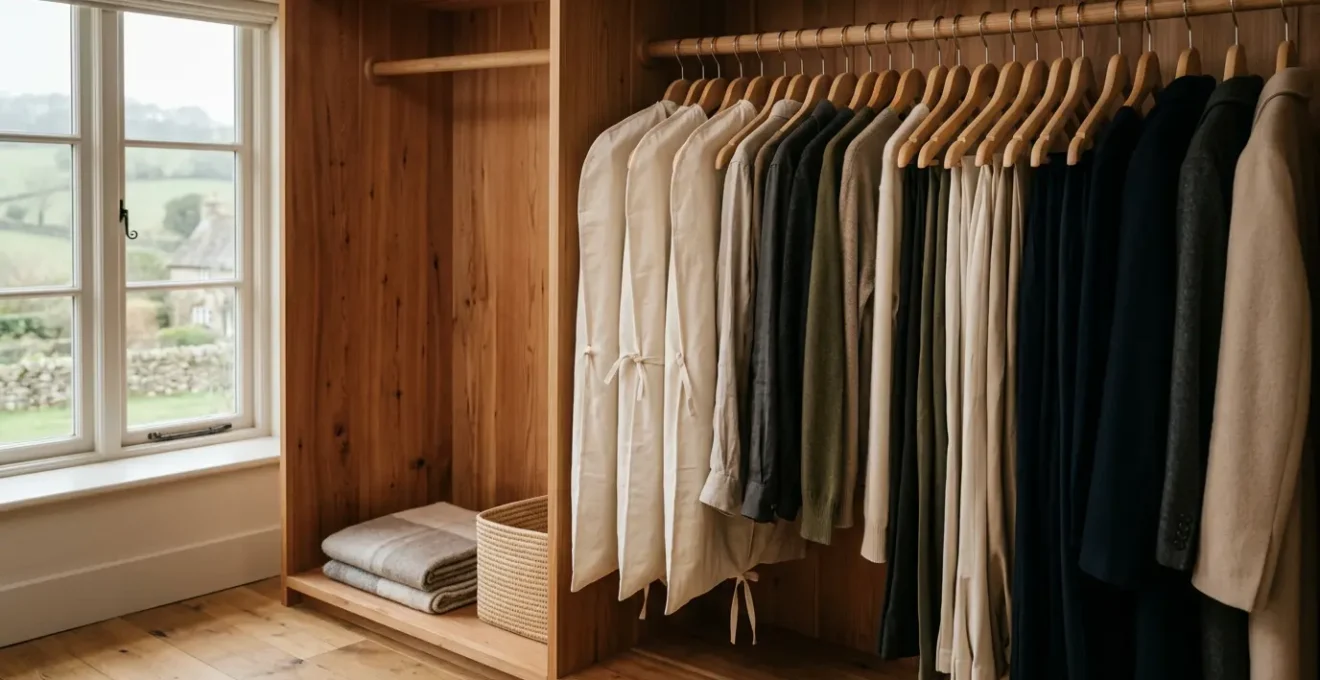
Investing in a compostable luxury garment doesn’t mean accepting its premature demise, especially in the damp UK climate; it means becoming a knowledgeable custodian.
- Proactive microclimate control in your wardrobe is non-negotiable to halt unwanted degradation of materials like mycelium leather.
- Waterless, specialised cleaning techniques and a multi-layered moth defence strategy are essential to preserving the fabric’s structural integrity.
Recommendation: Treat your garment as a biological asset. Mastering its lifecycle with scientific precision, from storage to eventual composting, is the key to its longevity and your peace of mind.
You’ve made a conscious investment in the future of fashion. That exquisite £500 dress, woven from algae yarn, or that sharp jacket, crafted from mycelium leather, represents more than just style; it’s a commitment to sustainability. Yet, a nagging fear persists, particularly here in the perennially damp UK: will your beautiful, biodegradable garment simply dissolve in a sudden downpour or quietly rot in your wardrobe? This anxiety is common, born from the misunderstanding that “compostable” means fragile and ephemeral.
The usual advice—”store it in a dry place” or “be careful when cleaning”—is unhelpful because it lacks precision. It doesn’t address the specific challenges of our climate or the unique material science of these innovative textiles. The truth is, these garments are not designed to self-destruct on a whim. They are engineered to break down under specific biological conditions, conditions you can and must control. The fear of accidental decay comes from a lack of knowledge, not an inherent flaw in the material.
This guide reframes the conversation. Instead of fearing your garment’s lifecycle, you will learn to manage it. We will move beyond generic tips to explore the scientific principles of preservation, transforming you from a worried owner into a confident custodian. You will learn not just *what* to do, but *why* you are doing it, from controlling the microclimate of your wardrobe to understanding the precise moment a garment is ready for its final, respectful return to the earth. This is the science of sustainable garment care.
This article provides a detailed roadmap for protecting your investment. You’ll find practical, UK-specific advice on everything from humidity control and specialist cleaning to pest prevention and long-term preservation, ensuring your luxury eco-garments thrive for years to come.
Summary: A Guide to Preserving Your Sustainable Luxury Fashion
- Why Do Natural Mycelium Leathers Degrade Faster in Humid British Wardrobes?
- How to Clean Water-Sensitive Biodegradable Couture Without Ruining the Shape?
- The Storage Mistake That Causes Moths to Devour Your £800 Organic Wool Coat
- Algae-Based Yarn or Traditional Organic Linen: Which Survives Daily Commutes Better?
- When is a Biodegradable Garment Truly Ready to Be Safely Composted?
- Why Do Discerning UK Consumers Now Refuse to Buy Non-Organic Silk Garments?
- The Mannequin Selection Error That Warps Historical Garments Out of Shape
- How to Secure Institutional Display Space for a Fashion Designer’s Archive?
Why Do Natural Mycelium Leathers Degrade Faster in Humid British Wardrobes?
Mycelium leather, often hailed as a revolutionary vegan alternative, is essentially a network of fungal threads. Its compostable nature is a key benefit, but this also makes it susceptible to its environment. The primary trigger for its degradation is not time, but a combination of moisture and microbial activity. The persistent dampness of the British climate can create a wardrobe microclimate with humidity levels well above the ideal 50-55%, creating the perfect breeding ground for the very microorganisms designed to break the material down at the end of its life.
This doesn’t mean your mycelium jacket will turn to dust overnight. However, prolonged exposure to high humidity can initiate a slow, premature weakening of the material’s structural integrity. You might first notice a change in texture, a slight tackiness, or a loss of suppleness. This is the material reacting to its environment, a process that must be actively managed. While research shows mushroom leather has a degradation time of 6-12 months in active soil, the goal is to prevent those conditions from ever being replicated in your closet.
Effective lifecycle management starts with taking control of your storage environment. This is a scientific and precise task, not a guessing game. Using a hygrometer to monitor humidity levels is essential. If levels are consistently high, deploying high-capacity, reusable moisture absorbers (like products from Unibond or Kontrol) becomes a non-negotiable part of your care routine. For high-value collections, a low-wattage heated rail can also help maintain a stable, dry environment, effectively putting the material’s biological clock on pause.
How to Clean Water-Sensitive Biodegradable Couture Without Ruining the Shape?
The thought of cleaning a water-sensitive garment like a bio-dress is daunting. Traditional washing methods, involving submersion and agitation, can be catastrophic. Water can cause fibres to swell, warp, or even begin the decomposition process prematurely, destroying not just the fabric’s texture but also the garment’s carefully constructed silhouette. The key is to shift your mindset from “washing” to “treating,” employing targeted, often waterless techniques to maintain freshness and address stains without compromising structural integrity.
For general maintenance, steam is your greatest ally. A gentle steaming not only removes wrinkles but also helps to neutralise odours without saturating the fabric. For more stubborn spots or stains, spot-cleaning is the only safe method. This involves using a minimal amount of a specialised, pH-neutral cleaning agent on a soft cloth and dabbing the affected area gently. Always test the cleaner on an inconspicuous area first, like an inner seam.
This paragraph introduces the concept of specialised cleaning. For a visual understanding of the careful technique required, the image below demonstrates the precision of professional dry spot-cleaning on a delicate fabric.
As you can see, the process is meticulous. In the UK, a growing number of specialists offer products designed for this exact purpose. For instance, The Clothes Doctor provides a range of eco-conscious, natural care products made in Britain. Their offerings include targeted stain removers and deodorising spritzes, which are perfect for reducing the need for machine washing and extending the life of delicate, compostable pieces. Embracing these professional-grade tools for at-home care is a vital part of preserving your investment.
The Storage Mistake That Causes Moths to Devour Your £800 Organic Wool Coat
The most common and devastating storage mistake is assuming a clean wardrobe is a safe wardrobe. Clothes moths (Tineola bisselliella) are not drawn to dirt, but to the protein keratin found in natural animal fibres like wool, cashmere, and silk. They seek out dark, undisturbed places to lay their eggs, and it’s the larvae that cause the damage by feeding on your garments. An £800 organic wool coat, stored without proper protection, is an ideal nursery for a moth infestation. The initial damage is often invisible, only becoming apparent when tiny holes appear or the fabric tears with minimal pressure.
A passive approach, like tossing a few old-fashioned mothballs into the wardrobe, is dangerously insufficient. A robust defence strategy is multi-layered and proactive. It begins before the garment is even stored: every item must be thoroughly cleaned to remove any invisible sweat or food particles that can attract pests. If an item cannot be washed, freezing it in a sealed bag for 72 hours will effectively kill any hidden larvae or eggs. This is a crucial first line of defence.
As the experts at Hayden Hill explain in their comprehensive guides, a proactive strategy is essential. In their words:
Clothes moths are drawn to natural fibers like cashmere, silk, and wool, seeking undisturbed spaces to lay their eggs. As larvae develop, they feed on delicate fabrics, gradually compromising your garments.
– Hayden Hill, Hayden Hill Moth Protection Guide
This expert insight highlights the need for active monitoring. Once cleaned, garments should be stored in breathable cotton storage bags, not plastic, which can trap moisture. Pheromone traps should be placed inside the wardrobe; these don’t kill all the moths but act as an early warning system, alerting you to their presence and helping to disrupt the breeding cycle. Finally, incorporating natural deterrents like cedar blocks or lavender sachets adds a final layer of protection, making the environment less appealing to adult moths seeking a place to nest.
Algae-Based Yarn or Traditional Organic Linen: Which Survives Daily Commutes Better?
When choosing a sustainable garment for daily wear, especially for the rigours of a commute, its material science is paramount. Algae-based yarns and traditional organic linen are both excellent biodegradable options, but they possess vastly different properties that affect their durability and comfort. The choice between them depends on a trade-off between resilience, elasticity, and resistance to environmental factors.
Algae-based yarn, a newer innovation, often boasts impressive properties like natural UV protection and antimicrobial qualities, making it excellent for skin contact. However, its tensile strength—the ability to resist breaking under tension—can be lower than traditional fibres, and it may weaken when wet. Organic linen, by contrast, is renowned for its exceptional strength, which even increases when damp. Its rigid structure, however, makes it prone to creasing and gives it less elasticity, meaning it may feel less forgiving during an active commute.
The following table, based on recent material science research, offers a direct comparison of their key performance metrics. This data is critical for making an informed decision based on your specific needs, as an in-depth analysis of modified cellulose filaments reveals.
| Property | Algae-Based Yarn | Organic Linen |
|---|---|---|
| Tensile Strength | 52.97 MPa (comparable to wool/polyester) | Higher strength but prone to creasing |
| Strain Percentage | 20.77% – 45.53% depending on treatment | Lower elasticity, more rigid structure |
| Water Resistance | Lower tensile strength when wet | Maintains strength when wet |
| Biodegradability | Faster degradation than cotton | Fully biodegradable in 2 weeks untreated |
| UV Protection | Natural UV protection and antimicrobial properties | Limited UV protection |
| Repairability | Complex repairs for snags | Easy to mend with sashiko stitching |
Ultimately, for a daily commute involving potential rain and physical stress, organic linen is the more robust choice due to its superior strength, especially when wet. Algae-based yarn, with its higher elasticity and antimicrobial benefits, might be better suited for less demanding wear or as a base layer where its softness and skin-friendly properties can be fully appreciated.
When is a Biodegradable Garment Truly Ready to Be Safely Composted?
The “compostable” label on a garment is a promise of a responsible end-of-life, not a threat of imminent collapse. Deciding when a garment has reached this final stage is a conscious choice based on a clear-eyed assessment of its condition. A piece is ready for composting not when it has a small, repairable hole, but when it has reached a state of terminal degradation where its structural integrity is permanently compromised and it can no longer fulfil its function as clothing. This distinction is crucial for maximising the garment’s lifespan.
Before considering composting, always explore options for repair, repurposing, or donation. Mending a seam or patching a hole extends the active life of the garment, which is the most sustainable choice of all. However, when signs of irreversible wear appear—such as fibres becoming brittle and snapping easily, significant and widespread discoloration (sometimes called ‘blooming’), or a loss of shape that cannot be restored—it’s time to prepare for its return to the earth. According to standards from the Textile Exchange, the material itself should be capable of breaking down within a maximum of 12 weeks in a compost environment.
The process of controlled decomposition requires careful preparation. It is not as simple as tossing the item onto a compost heap. All non-compostable elements must be meticulously removed. This includes zippers, buttons (unless certified as biodegradable), synthetic brand labels, and, most critically, any polyester stitching thread, which is often used for strength even in natural-fibre garments. Failing to remove these contaminants will pollute the compost and defeat the purpose of the sustainable design.
Checklist for Compost Readiness
- Visual Inspection: Check for fibre brittleness and irreversible discoloration or ‘blooming’ that indicates terminal degradation.
- Structural Assessment: Test for a loss of structural integrity that cannot be repaired through mending or other restoration techniques.
- Component Removal: Carefully remove all non-compostable parts, including metal or plastic zips, buttons, synthetic labels, and polyester stitching thread.
- Verify Compostability Type: Confirm if the garment is certified for home composting or requires industrial composting facilities to break down safely and efficiently.
- UK Regulation Check: Be aware that most biodegradable garments cannot go into UK council food or garden waste bins; you must arrange for proper industrial composting if required.
Why Do Discerning UK Consumers Now Refuse to Buy Non-Organic Silk Garments?
The shift towards compostable and biodegradable luxury is driven by more than just environmental concerns; it’s deeply rooted in ethics. For a growing number of discerning UK consumers, the story behind a fabric is as important as the fabric itself. This is particularly evident in the case of silk. Conventional silk production involves boiling the cocoons of silkworms to extract the long fibres, a process that kills the pupae inside. This has led many to seek out ethical alternatives, fundamentally changing the luxury market.
Brands and retailers in the UK have been quick to respond to this demand for greater transparency and compassion in their supply chains. Luxury department stores like Selfridges, through initiatives such as their ‘Project Earth’ edit, are actively championing materials like peace silk (also known as Ahimsa silk), where the moth is allowed to hatch and leave the cocoon before the silk is harvested, and materials with GOTS (Global Organic Textile Standard) certification. This certification ensures not only that the fibres are organic but also that the entire production process meets strict social and environmental criteria.
This movement is heavily influenced by pioneering luxury designers who have built their brands on ethical foundations. As the sustainable fashion authority Good On You notes, these leaders have set a new benchmark for the industry:
A member of the Ethical Trading Initiative and Sustainable Apparel Coalition, Stella McCartney has set some excellent environmental standards across the luxury fashion industry. Stella uses some lower-impact materials, including recycled polyester and organic cotton, and has adopted the ETI Code of Conduct that includes a living wage definition.
– Good On You, Sustainable Fashion and Beauty Brands From the UK
For the UK consumer, choosing organic or peace silk is a refusal to participate in a system they deem cruel or opaque. It’s a conscious decision to align their purchasing power with their values, ensuring their investment in a luxury garment supports a holistic vision of sustainability that includes animal welfare and ethical labour practices from start to finish.
The Mannequin Selection Error That Warps Historical Garments Out of Shape
Preserving a garment for the long term, whether it’s a piece of innovative bio-couture or a vintage item, requires adopting a conservator’s mindset. One of the most common errors in long-term storage is using improper support, which can permanently damage a garment’s shape. Hanging a heavy knit or a delicate compostable garment on a thin wire hanger, for example, concentrates all the weight on the shoulders. Over time, gravity will stretch the fabric, creating irreversible distortion and ruining the intended silhouette.
Museums like the V&A and the Fashion Museum in Bath would never make this mistake. For their priceless archives, they use custom-built, padded forms that distribute weight evenly and support the garment’s structure. While a custom mannequin for every piece is impractical at home, the principle can be easily applied. This means investing in wide, padded hangers that mimic the shape of the human shoulder for structured jackets and coats. UK-based suppliers like The Hanger Store provide professional-grade options suitable for home conservation.
Crucially, some items should never be hung at all. Heavy compostable knits, delicate beaded pieces, or garments cut on the bias are extremely susceptible to stretching. The professional standard for these items is to store them folded flat in an acid-free archival box. To prevent permanent creasing, acid-free tissue paper should be used to pad out the folds and stuff sleeves or bodices, helping the garment retain its three-dimensional shape even while stored flat. This simple, museum-inspired technique is the single best way to protect against gradual warping and loss of form.
Key takeaways
- Your compostable garment’s biggest enemy in the UK is uncontrolled humidity; active microclimate management in your wardrobe is essential.
- Adopt a “treatment” over “washing” mindset, using waterless techniques like steaming and precise spot-cleaning to preserve a garment’s structural integrity.
- A multi-layered defence—combining pre-storage cleaning, breathable bags, and pheromone traps—is the only effective way to protect valuable natural fibres from moths.
How to Secure Institutional Display Space for a Fashion Designer’s Archive?
Elevating a fashion designer’s work from a personal collection to a recognised archive is the ultimate act of preservation. Securing space in an institution like a museum or university gallery not only guarantees its physical safety in a climate-controlled environment but also cements its cultural value for future generations. This transition, however, requires a strategic approach. Institutions are not simply storage facilities; they are curatorial bodies looking for collections that tell a compelling story and have clear historical or artistic significance.
The first step is to professionalise the collection. This involves meticulous cataloguing: each piece must be photographed, documented with details of its materials, construction, date, and its role in the designer’s career. Creating a narrative is vital. Why is this collection important? Does it showcase a revolutionary technique, a unique use of sustainable materials like early-generation mycelium leather, or does it capture a specific moment in British fashion history? This narrative forms the core of your proposal to an institution.
Approaching an institution requires research. Identify curators whose interests align with the designer’s work. A generic email is easily ignored; a tailored proposal that demonstrates you understand the institution’s mission and how the archive would complement its existing collection is far more effective. Emphasise the archive’s relevance, connecting it to broader themes like the rise of sustainable fashion, material innovation, or a specific cultural movement. By presenting a well-documented, historically contextualised, and culturally relevant collection, you transform a designer’s body of work into an undeniable asset for any cultural institution.
By applying these scientific principles of care, you not only protect your financial investment but also honour the ethical and environmental promise of your garment. You become an active participant in the circular fashion economy, ensuring beauty and responsibility go hand in hand. To take the next step, consider having your most valuable pieces professionally assessed for a long-term preservation plan.