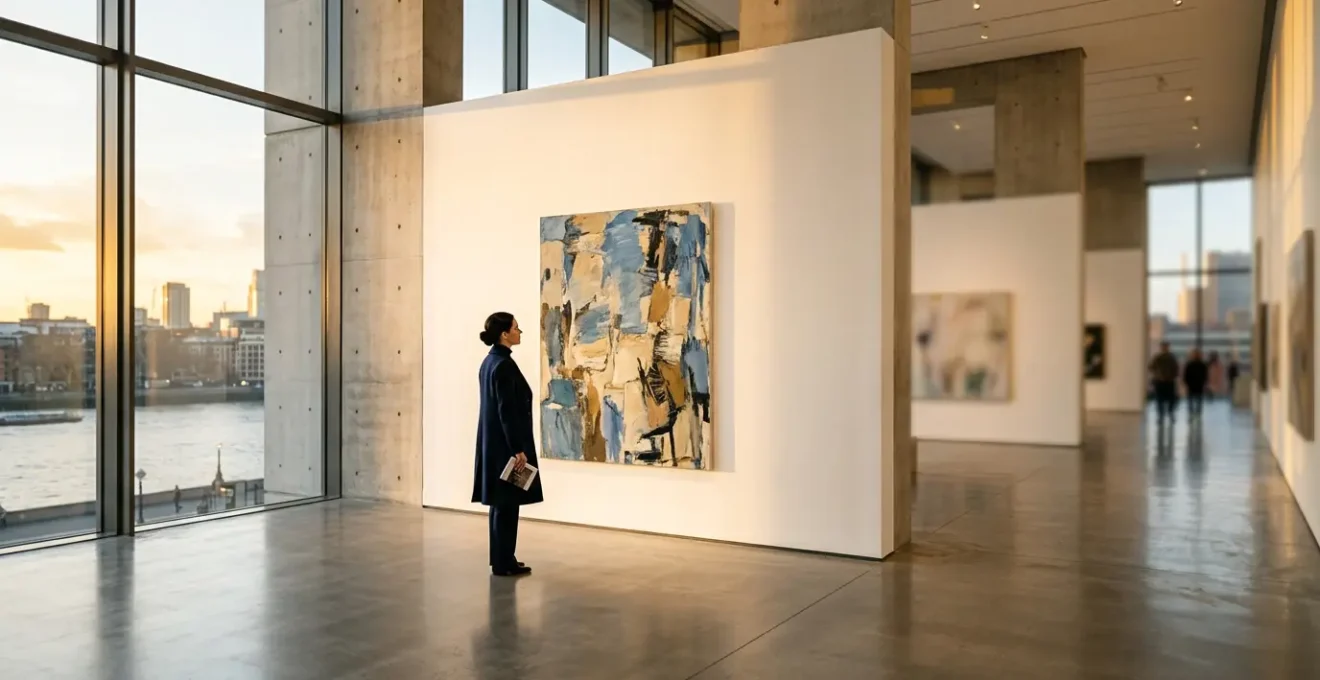
Transitioning into London’s art patronage circles is less about financial might and more about strategic engagement and building cultural capital.
- Begin with foundational steps like a Tate membership to gain structured access and understand the institutional ecosystem.
- Develop your collector’s eye by strategically investing a modest budget in emerging artists at degree shows and non-profit spaces.
Recommendation: Start by joining a major institution’s patronage program to access curator-led events, which are the primary gateways to deeper involvement.
You appreciate art. You frequent London’s world-class museums, wander through blockbuster exhibitions, and feel the pull of the cultural world. Yet, there’s a velvet rope, an invisible barrier between being a visitor and becoming a participant. You see the names on the benefactors’ walls, hear whispers of private views and studio visits, and wonder how one crosses that threshold. The common advice—to simply donate or attend more galleries—feels hollow and directionless, doing little to bridge the gap between being an admirer on the outside and a respected patron on the inside. Many assume this world is accessible only through immense wealth or inherited connections, a belief that keeps passionate enthusiasts at arm’s length.
But what if the key isn’t the size of your chequebook, but the sophistication of your strategy? The journey from casual observer to active patron is a learnable skill. It is about understanding the unwritten rules of the art ecosystem, from the graduate shows in Peckham to the gala dinners in Mayfair. It requires a deliberate shift from passive consumption to active, strategic engagement. This isn’t about buying your way in; it’s about earning your place through informed participation, genuine curiosity, and a commitment to contributing to the cultural landscape.
This guide demystifies that process. We will explore the practical pathways that transform an enthusiast into an insider. You will learn how to leverage institutional memberships, allocate a starting budget effectively, discern real value from mass-market reproductions, and understand the nuanced social dynamics that govern access and influence. This is your roadmap to not only collecting art but to building a meaningful legacy within London’s vibrant cultural heart.
This article breaks down the journey into a series of strategic steps, from your first membership to your potential role in shaping an institution’s collection. The following sections provide a clear and actionable guide to navigating this rewarding transition.
Summary: How to Transition from Casual Museum Visitor to Active Patron in London?
- Why Do Tate Memberships Serve as the Ultimate Stepping Stone for New Patrons?
- How to Allocate a £2,000 Annual Budget Across Promising Independent Shows?
- The Curation Misconception That Causes Enthusiasts to Overpay for Posters
- Patron Syndicate or Individual Buying: Which Maximises Your Cultural Impact?
- When is the Best Time of Year to Spot Rising Talent at Graduate Degree Shows?
- Why Do VIP Gala Dinners Dictate Who Gets First Refusal on New Collections?
- When Should a Living Designer Begin Donating Key Pieces to National Archives?
- How to Secure Institutional Display Space for a Fashion Designer’s Archive?
Why Do Tate Memberships Serve as the Ultimate Stepping Stone for New Patrons?
For the aspiring patron feeling like an outsider, a major institutional membership is not just a donation; it is the most structured and effective entry point into the art world’s inner circles. London institutions rely heavily on private donors, and in return, they offer a curated ladder of engagement. The journey begins modestly. A basic Tate membership, for instance, establishes your presence within their ecosystem, but upgrading to a Patron level is where the transition truly starts. This move unlocks the “out-of-hours access and exclusive benefits” that are the currency of this world: curator-led tours, private views, and studio visits. These are not just social perks; they are your primary learning and networking opportunities.
The true value of these memberships lies in the access they provide to key personnel. Attending members-only talks allows you to build relationships with the curatorial staff who shape the collections. It’s in these smaller, more intimate settings that you can demonstrate your knowledge and passion, moving from a face in the crowd to a recognized supporter. This is the foundation of building your cultural capital.
The path from a general member to a committee member is a game of strategic engagement. By progressing through the patronage tiers, you signal a growing commitment. The key steps involve:
- Establish Your Presence: Start with a basic membership to get on the institution’s radar and gain unlimited exhibition access.
- Upgrade for Access: Progress to the Patron level (starting from around £1,000 annually at many institutions) to attend exclusive curator-led events.
- Build Relationships: Use these events to engage meaningfully with curators and fellow patrons. Ask informed questions that show you understand the institution’s mission.
- Demonstrate Commitment: Before seeking a committee role, consider making targeted donations to specific acquisition funds that align with your interests.
- Network Strategically: Connect with existing committee members at patron events to understand the selection criteria and signal your interest.
This deliberate progression transforms your financial support from a simple transaction into a powerful tool for integration. It’s the first and most crucial step in turning passive appreciation into active participation.
How to Allocate a £2,000 Annual Budget Across Promising Independent Shows?
Once you are comfortable within the institutional setting, the next stage of your patronage journey is to begin collecting. This does not require a vast fortune. A modest, strategically allocated budget is far more impactful than sporadic, expensive purchases. The art market itself offers a clue: research from the 2026 UBS Global Art Market Report indicates that 52% of collector expenditure is on works by new and emerging artists. This is where a small budget can make a significant impact, both for your collection and for the artists you support.
A £2,000 annual budget is an excellent starting point for discovering talent in London. The key is diversification and focusing on the primary market where artists directly benefit. As the art advisory Artelier notes, a small discovery can have a profound impact: “Picture this: It’s 1952, and you stumble upon undiscovered charcoal prints by a young David Hockney at the Royal College of Arts degree show, priced at just £5-100. Fast forward to today, and you’d be witnessing a remarkable return on your investment, potentially worth thousands if not hundreds of thousands of pounds.” While such returns are rare, the principle holds: early support is powerful.
A structured approach ensures your budget is used for maximum discovery and impact. Consider this allocation strategy, focusing on the three main sources of emerging talent in London.
| Category | % Allocation | £ Amount | Target Sources | Expected Works |
|---|---|---|---|---|
| Top Art School Graduates | 50% | £1,000 | RCA, Slade degree shows | 2-3 small works or prints |
| Non-profit Space Artists | 30% | £600 | Chisenhale, Gasworks | 1-2 experimental pieces |
| Artist-run Spaces | 20% | £400 | Peckham, Deptford studios | 1 wildcard discovery |
This balanced portfolio approach allows you to acquire several pieces, build relationships with a new generation of artists, and develop your own taste. It shifts your role from consumer to a vital part of the art ecosystem, providing crucial early-career funding that artists depend on. This is a far more meaningful form of patronage than simply buying a poster at a museum shop.
The Curation Misconception That Causes Enthusiasts to Overpay for Posters
As you begin to acquire art, the most critical skill to develop is discernment. A common pitfall for new collectors is confusing mass-market museum posters with valuable limited edition prints. A poster is a reproduction, often printed in unlimited quantities, with little to no secondary market value. A limited edition print, however, is an original artwork conceived by the artist in a specific medium (like screenprinting or lithography) and produced in a finite number. Understanding this distinction is fundamental to building a collection of lasting worth and avoiding costly mistakes.
The desire to own a piece of an exhibition is strong, but it’s important to channel that enthusiasm correctly. Interestingly, a focus on authenticity often outweighs financial considerations for many new collectors. A recent survey highlighted that for 93% of respondents, investment potential does not factor into their purchasing decisions; personal enjoyment and artist support are paramount. This mindset aligns perfectly with true patronage. Supporting an artist through the purchase of a legitimate limited edition print achieves this goal, whereas buying a poster primarily benefits the institution’s retail arm.
To avoid overpaying for a simple reproduction, you must learn to become a detective, examining the work for key markers of authenticity. This five-point audit will help you identify a valuable print from a disposable poster.
Your 5-Point Audit for Authentic Art Prints
- Examine the Foundation: Check the paper stock. Is it heavy, acid-free museum-quality paper (often 300gsm or more), or does it feel like standard poster material?
- Verify the Scarcity: Look for the edition number (e.g., 23/500) and the artist’s signature, typically in pencil at the bottom. A signature printed within the image is a major red flag.
- Confirm the Origin: Identify the publisher’s “chop” or embossed seal. This mark of authenticity from the publishing house is a key sign of a legitimate edition.
- Assess the Technique: Determine the printing method. Is it a high-value process like giclée, screenprint, or lithograph, or a mass-produced digital offset print?
- Investigate the Context: Research the print’s release. Was it tied to a major exhibition or a significant artist milestone? This context adds considerable value and provenance.
Mastering this checklist is a crucial exercise in building your curatorial eye. It trains you to look beyond the image and understand the object itself—its creation, its context, and its place in the artist’s body of work. This is the expertise that separates a casual buyer from a serious collector.
Patron Syndicate or Individual Buying: Which Maximises Your Cultural Impact?
As your confidence and budget grow, a new strategic question emerges: is it better to continue collecting individually or to join forces with others in a patron syndicate? Both paths offer distinct advantages, and the right choice depends on your personal goals for risk, control, and community. Individual buying offers complete autonomy, allowing you to build a deeply personal collection and forge direct relationships with artists. However, it also means bearing the full financial risk and relying solely on your own research.
A patron syndicate, by contrast, operates on the principle of collective power. By pooling resources, members gain access to higher-value works that might be out of reach for an individual. This collaborative model distributes financial risk and, perhaps more importantly, creates a community of shared expertise and mentorship. For a newcomer, the learning curve can be significantly shortened within a supportive group. New hybrid models are also emerging, such as subscription-based programmes that transform the relationship from purely transactional to community-focused, with membership tiers at galleries like Saatchi Yates offering a modern entry point to collective engagement.
Choosing between these two models requires a clear-eyed assessment of what you hope to achieve. The following table breaks down the key differences in impact and experience.
| Factor | Individual Buying | Syndicate Participation |
|---|---|---|
| Control | 100% decision authority | Shared governance model |
| Financial Risk | Full exposure to market volatility | Risk distributed among members |
| Buying Power | Limited to personal budget | Pooled resources access higher-value works |
| Learning Curve | Self-directed research required | Collective expertise and mentorship |
| Artist Relationship | Direct, personal connection | Institutional-level access |
| Exit Strategy | Full liquidity control | Subject to syndicate agreements |
Ultimately, the decision hinges on your definition of “impact.” If your goal is to build a collection that is a pure reflection of your personal vision, individual buying is unparalleled. If, however, you seek to participate in the acquisition of major works, accelerate your learning, and build a strong peer network, a syndicate offers a powerful and efficient access pathway.
When is the Best Time of Year to Spot Rising Talent at Graduate Degree Shows?
Engaging with artists at the very beginning of their careers is one of the most rewarding aspects of patronage. Graduate degree shows at London’s top art schools—such as the Royal College of Art (RCA), Slade School of Fine Art, and Goldsmiths—are the primary hunting grounds for the next generation of talent. However, navigating these shows requires a strategic sense of timing. The crowded, chaotic opening nights are often poor environments for genuine connection. The real opportunity lies in a more patient and deliberate approach throughout the year.
Emerging artists are learning to navigate the arts ecosystem very early in their careers; they want to secure gallery representation, exhibit in not-for-profit spaces and museums, and build relationships with curators and writers.
– Bolanle Tajudeen, Frieze London
This professional mindset means that artists are receptive to serious interest from informed collectors. Your goal is not just to buy a piece, but to start a conversation that could lead to a long-term relationship. Approaching this with a clear timeline maximises your chances of making meaningful discoveries.
The art school calendar has a distinct rhythm. Understanding it allows you to engage at moments of lower competition and higher artist accessibility. A truly strategic engagement plan for degree shows looks like this:
- January-February: Attend the MA Interim Shows, especially at the RCA. These are less polished and crowded than the final shows, offering a glimpse of experimental work and early ideas.
- May-June: Focus on the main final degree shows, but plan your visit for a weekday afternoon a few days after the opening to have a quieter, more focused viewing experience.
- July-August: This is the “post-show slump.” Artists have cleared their studios and are often most accessible. Use this time to follow up on artists you admired and request a studio visit.
- September: Keep a close watch on the artists you’ve bookmarked. This is when they begin establishing their post-graduation practices and are looking for support.
- October-November: Monitor the programmes of emerging art galleries. Many will feature recent graduates in group shows, validating your earlier selections and offering another chance to connect.
By following this timeline, you move from being a reactive spectator to a proactive talent scout. You gain an intimate understanding of an artist’s practice and position yourself as a crucial early supporter—the very essence of patronage.
Why Do VIP Gala Dinners Dictate Who Gets First Refusal on New Collections?
In the upper echelons of the art world, the most significant transactions and decisions are rarely made in the stark white light of a gallery. They are forged in the curated intimacy of VIP events, particularly the annual gala dinners hosted by major institutions. These events are the apex of the patronage ladder, where access, influence, and commerce converge. For an aspiring patron, understanding the function of these dinners is key to grasping the unwritten rules of the primary market’s top tier.
These gatherings are not simply fundraisers; they are carefully orchestrated platforms for relationship building. For example, a patron membership at the British Museum at the £3,500 level includes an invitation to the annual Director’s Dinner. This isn’t just a meal; it’s an opportunity to sit alongside curators, trustees, and major collectors. It is within these exclusive contexts that galleries and artists “soft launch” new works, gauging interest from top clients before a collection is ever publicly announced. Being in that room means you are part of the first-look conversation, giving you a crucial advantage.
This dynamic extends beyond museums to the commercial world, particularly at major art fairs. While the fair floor is open to many, the real business often happens at the exclusive dinners and pre-previews. It is no surprise that art fairs are a huge driver of revenue; recent data shows that art fair sales increased to 35% of dealer turnover, a significant portion of which is initiated in these VIP settings. Securing an invitation is a direct result of the strategic engagement you’ve built over time: your institutional support, your collecting history, and your relationships with gallerists and curators.
These events dictate who gets first refusal because they function on a foundation of trust and proven commitment. Galleries offer their best works to collectors they know are serious, knowledgeable, and reliable. A seat at the gala dinner is a signal to the entire ecosystem that you have earned that trust. It is the culmination of the journey from an anonymous visitor to a key player whose opinion—and purchasing power—is valued.
Key Takeaways
- Becoming a patron is a journey of strategic engagement, not just financial donations.
- Start with institutional memberships (like the Tate) to gain structured access and build relationships.
- Focus early collecting efforts on emerging artists from degree shows and non-profits for maximum impact.
When Should a Living Designer Begin Donating Key Pieces to National Archives?
For the most committed patrons, particularly those with a focus on a specific artist or designer, the ultimate act of cultural contribution is to think beyond personal collection towards public legacy. Facilitating the donation of key works to national archives like the V&A is a profound form of patronage that ensures an artist’s work is preserved for future generations. For a living artist or designer, the question of *when* to begin this process is a strategic one, balancing career momentum with the desire for institutional recognition.
Case Study: The V&A’s Acquisition of Digital Heritage
A prime example of modern archival strategy is the V&A’s acquisition of the first-ever YouTube video. This move demonstrated the museum’s commitment to preserving “born-digital” artifacts and the interactive experience of the Web 2.0 era. By partnering with YouTube, the museum set a precedent for collecting and preserving complex digital objects, showing that archival-worthy pieces are not limited to physical items. This illustrates that a designer’s or artist’s most “pivotal” work might be an intangible digital file or experience, and the time to preserve it is when its cultural impact is first recognized.
The decision to donate should not be random. It should be a deliberate act, timed to maximise value for both the designer’s brand and the acquiring institution. A successful donation strategy is built incrementally and often involves a patron’s support to facilitate the process. A designer should consider the following timeline:
- Identify the Pivotal Collection: The process should begin after a collection that marks a significant aesthetic shift or wins major critical recognition. This piece becomes the cornerstone of the archival narrative.
- Build Incremental Relationships: Start by offering key pieces on loan for group exhibitions. This allows the museum to work with the pieces and builds trust before any discussion of a permanent donation.
- Align with Brand Milestones: Time the official donation to coincide with a brand anniversary or retrospective. This creates a powerful press moment and amplifies the significance of the gift.
- Include Process Materials: A truly valuable donation includes not just the finished garment, but also sketches, fabric samples (toiles), and mood boards. This provides immense value for researchers.
- Negotiate Retention Rights: When donating, it is often possible to negotiate the right to borrow back pieces for future brand exhibitions, ensuring the archive remains a living part of the designer’s story.
For a patron, guiding a designer through this process—and potentially offering to cover conservation costs to make the acquisition more attractive to the museum—is an act of legacy building that transcends simple collecting. It secures a permanent place for the artist in the cultural canon.
How to Secure Institutional Display Space for a Fashion Designer’s Archive?
Donating pieces to an archive is the first step; securing institutional display space is the ultimate goal that cements a designer’s legacy. This is rarely a straightforward process. Museums have limited space and rigorous curatorial schedules. A successful strategy requires a long-term vision, patience, and a deep understanding of institutional priorities. A patron can play an invaluable role in navigating this landscape, acting as an advocate and facilitator for the designer they support.
By reconstructing an early watch page, we aren’t just showing a video; we are inviting the public to step back in time to the beginning of a global, cultural phenomenon
– Neal Mohan, V&A Museum Acquisition Announcement
This perspective from YouTube’s CEO on the V&A’s acquisition highlights what museums are looking for: not just objects, but stories that capture a cultural moment. To secure display space, the donation must be framed as a compelling narrative that a curator can build an exhibition around. This means the archive must be comprehensive, well-documented, and contextually rich.
There are several strategic paths to securing a place in a museum’s exhibition schedule, each with a different timeframe and level of commitment. The “Direct Full Donation” approach is often the least effective without a prior relationship. A far more successful route is the “Loan-to-Permanent” strategy, where pieces are first loaned for a group show. This proves their exhibition value and builds a case for a more significant, potentially solo, exhibition in the future. An “Incremental Donation” over 5-10 years builds the highest level of trust and can lead to a sustained institutional relationship.
The most direct route, however, is a “Funded Acquisition.” In this scenario, a patron or group of patrons not only facilitates the donation of the archive but also provides the funding to cover the costs of conservation, cataloguing, and even the exhibition itself. This removes the primary barriers for the institution and can lead to the highest form of recognition, such as a named gallery or exhibition. This represents the pinnacle of patronage: directly enabling the public’s access to important cultural works and shaping the narrative of art history.
You now have the map. The journey from the museum lobby to the patron’s dinner is not a sprint but a marathon of learning, connecting, and contributing. The path is clear: start with strategic institutional support, develop your eye by collecting emerging art, and graduate to a level where you are not just acquiring works but actively shaping cultural legacy. The next logical step is to put this knowledge into practice. Begin by researching the patronage programs at your favorite London institution and identify the next graduate degree show on your calendar.