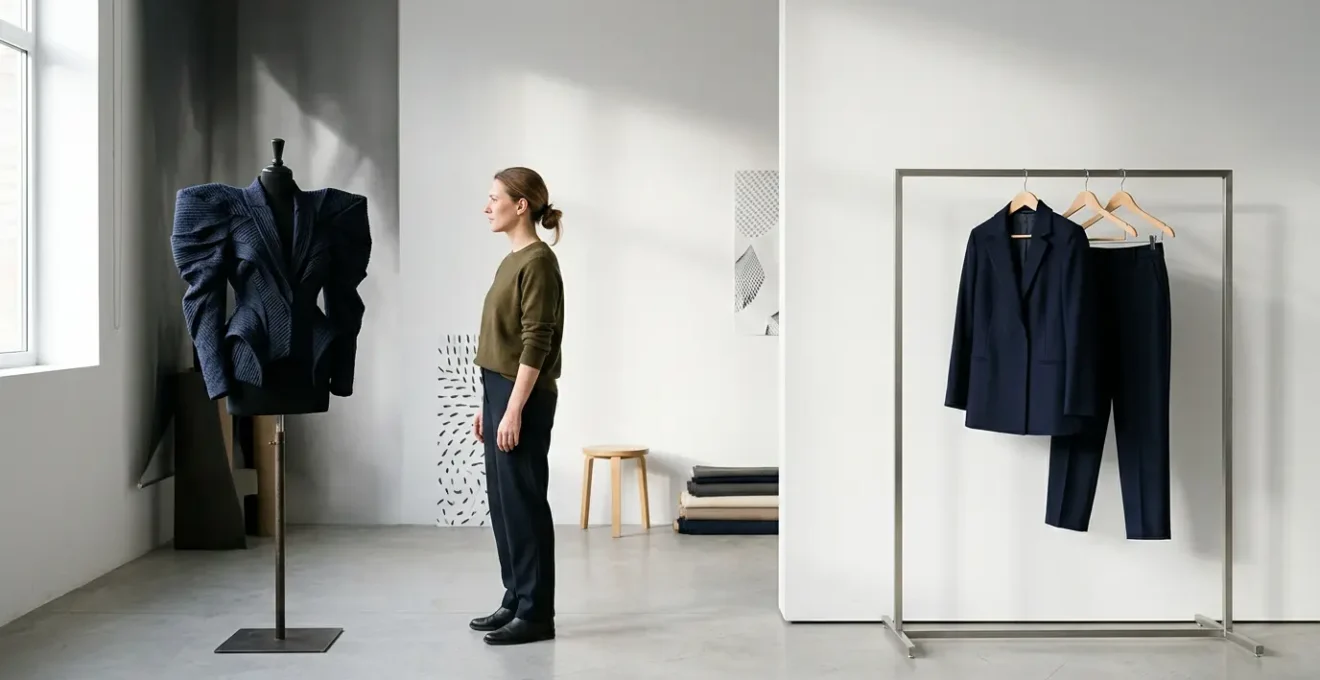
The key to commercialising avant-garde fashion isn’t ‘toning it down’; it’s a disciplined process of strategic deconstruction to isolate a single, potent design element and rebuild the garment around it for a specific market tier.
- Success hinges on identifying the ‘commercial core’ of a runway piece—be it a silhouette, a detail, or a texture—and sacrificing the rest.
- A tiered translation framework allows for different versions of a trend to coexist, targeting distinct retailers from aspirational to high-street.
Recommendation: Immediately implement rigorous wearability audits and a clear ‘Good, Better, Best’ pricing architecture. UK buyers prioritise collections that demonstrate not just creativity, but a clear path to profit.
For a high-street fashion director, the bi-annual runway season presents a recurring paradox. You witness a breathtaking, sculptural garment—a masterpiece of form and imagination—and your first thought isn’t inspiration, but a sinking feeling: “How on earth do I sell *that*?” The gulf between a Paris catwalk and a packed Zara on a Saturday seems immense. The standard advice often feels frustratingly vague, a loop of “take inspiration, don’t copy,” or the dangerous oversimplification of “just use cheaper fabrics,” which often leads to sad, lifeless imitations that fail to capture any of the original’s magic.
This approach is flawed because it treats translation as a simple act of reduction. But what if the process wasn’t about subtraction, but about strategic engineering? The true challenge isn’t making an extreme shape smaller; it’s about deconstructing its DNA to find the single, most commercially potent element and then rebuilding a wearable, desirable, and profitable product around that core idea. This requires a pragmatic, systematic framework that moves beyond guesswork into a repeatable process. This guide provides that framework, detailing a methodology for deconstruction, tiered translation, and strategic pricing that resonates with the realities of the UK mass market.
This article will guide you through a structured methodology for turning unwearable art into high-street hits. We’ll explore the practical reasons why extreme shapes fail, how to scale them intelligently, and the crucial strategies for fabric, timing, and pricing that secure major retail orders in the UK market. The following summary provides a roadmap of the key stages in this process.
Table of Contents: From Extreme Shapes to Profitable Collections
- Why Do Oversized Sculptural Shoulders Fail Miserably on Standard Retail Racks?
- How to Scale Down Extreme Proportions While Retaining the Original Design DNA?
- The Fabric Substitution Flaw That Makes High-Fashion Knockoffs Look Embarrassingly Cheap
- Direct Replication or Subtle Inspiration: Which Sells Better to the UK Mass Market?
- When to Drop Trend-Heavy Silhouettes Into Stores to Catch Peak Consumer Demand?
- Bamboo Viscose or Organic Hemp: Which Drapes Better for Evening Wear?
- Why Do UK Department Stores Ignore Great Collections That Lack a Clear Pricing Strategy?
- How to Leverage Paris Runway Exposure to Secure Major UK Retail Orders?
Why Do Oversized Sculptural Shoulders Fail Miserably on Standard Retail Racks?
The journey from an impactful runway moment to a retail disaster often begins with a fundamental misunderstanding of the physical world of the consumer. An oversized, sculptural shoulder that looks magnificent on a 6-foot model in controlled lighting becomes a practical nightmare in everyday life. The issue isn’t just aesthetic; it’s a collision with the mundane realities of closets, commutes, and social spaces. Industry data paints a stark picture of this disconnect; for instance, some industry estimates show apparel return rates reaching 40-50% for particularly challenging categories, a figure often driven by poor fit and impracticality.
These high return rates are a direct consequence of failing a series of unspoken “wearability audits.” A garment might have hanger appeal, but can it pass the ‘coat test’, fitting comfortably under standard outerwear? Is it ‘commute compatible’, or will the wearer be unable to navigate a crowded tube carriage? Does it pass the ‘sit test’, or does the entire structure collapse or deform awkwardly when seated? These are not minor details; they are the core user experience of a garment. A failure in any of these areas leads to dissatisfaction and returns.
To pre-empt these failures, a rigorous, real-world testing protocol is essential before a design ever reaches the pattern-cutting stage. This moves the assessment from a purely visual one to a practical, user-centric evaluation.
- Test the ‘hanger appeal’: Does the garment hold its intended shape and look appealing on standard retail fixtures, or does it slump into a confusing mess?
- Apply the ‘coat test’: Can the piece fit comfortably under the average trench coat or puffer jacket without bunching or distortion?
- Check the ‘commute compatibility’: Is the silhouette practical for someone using public transport, getting into a car, or carrying a bag?
- Evaluate the ‘sit test’: Does the structure collapse, crease excessively, or become uncomfortable when the wearer is seated for a period of time?
- Consider the ‘movement range’: Can the wearer comfortably navigate a crowded space, reach for an item on a high shelf, or perform other daily movements?
How to Scale Down Extreme Proportions While Retaining the Original Design DNA?
The solution to extreme proportions is not to simply “tone it down.” That approach leads to diluted, uninspired designs. The professional method is Strategic Deconstruction: a process of analysing the avant-garde piece to isolate its single most powerful and translatable element—its ‘commercial core’. Is the magic in the razor-sharp shoulder line, the specific volume of the sleeve, the way a drape falls, or the texture of a unique pleat? You can only keep one. The rest is sacrificed for wearability.
This process is about identifying the design’s soul and protecting it at all costs. Once you’ve isolated the core DNA, you can rebuild a completely new, commercially viable garment around it. This is where a tiered translation framework becomes invaluable, allowing you to create different versions of the trend for different retail environments and consumer appetites.
As this visualisation of the deconstruction process suggests, the designer’s hands are isolating a key feature from a complex form to translate it into a wearable pattern. This tiered approach allows a brand to maximise the commercial potential of a single runway idea across multiple market segments, from high-concept boutiques to mass-market high streets.
This tiered system provides a clear roadmap for product development teams, ensuring that adaptations are strategic, not arbitrary. It allows you to service a retailer like Selfridges with an aspirational piece while providing Zara with a more accessible version, all stemming from the same original concept.
| Tier | Volume Reduction | Target Retailer | Key Feature Retained |
|---|---|---|---|
| Direct Runway | 0% | Museum/Press | Full artistic vision |
| Aspirational Retail | 30% | Selfridges, Dover Street | Silhouette + detail |
| High Street | 70% | Zara, COS | One signature element |
The Fabric Substitution Flaw That Makes High-Fashion Knockoffs Look Embarrassingly Cheap
One of the most common and damaging mistakes in translating runway looks is the “fabric substitution flaw.” This occurs when a design team replaces an expensive, architectural fabric like a silk gazar or a bonded neoprene with a cheap polyester equivalent, assuming that mimicking the colour and pattern is enough. It never is. The result is inevitably a garment that looks and feels cheap, a sad echo of the original that lacks all of its structural integrity and sophisticated drape. The original fabric wasn’t just a surface; it was the engineering that held the entire design together.
The solution lies in shifting the focus from the material itself to the ‘fabric intent’. What was the original fabric *doing*? Was it creating sharp, sculptural volume? Was it flowing with a liquid, lustrous drape? Was it catching the light in a specific way? Your goal is to find a commercially viable alternative that achieves the same *effect*, even if it’s a completely different composition. This requires a deeper, multi-sensory evaluation of potential substitutes, going far beyond a simple visual match.
A structured evaluation process helps in making smarter, more effective substitutions that honour the original design’s spirit. By assessing these properties, you can find a £10/metre fabric that performs the same structural or fluid duty as a £100/metre couture textile.
- Assess the ‘hand’: How does the fabric feel between the fingers? Is it cool, dry, soft, or crisp? This directly impacts the wearer’s perception of quality.
- Test the ‘sound’: Does it rustle, crinkle, or move silently? The sound a garment makes contributes to its overall character (e.g., the crisp swish of taffeta).
- Evaluate light reflection: Is the surface matte, lustrous, or high-gloss? The way fabric interacts with light is crucial for its perceived richness.
- Check memory retention: Does it bounce back immediately when crushed, or does it hold the crease? This determines its performance in real-world wear.
- Compare drape coefficient: Does the fabric fall in rigid, architectural folds, or does it drape fluidly against the body? This is fundamental to replicating the silhouette.
Direct Replication or Subtle Inspiration: Which Sells Better to the UK Mass Market?
The UK fashion market is not monolithic. The answer to whether direct “dupes” or subtle inspirations sell better depends entirely on which segment of the market you are targeting. A strategy that works for a fast-fashion giant like Boohoo would be disastrous for a more quality-conscious brand like COS. Attempting a one-size-fits-all approach is a recipe for high return rates and brand dilution. In fact, some aggressive fast fashion brands experience return rates climbing to 38%, partly due to the disposable nature of direct-copy trends.
The most successful high-street players understand this segmentation and tailor their translation strategy accordingly. They recognise that the TikTok-driven consumer values speed and literal interpretation, while the professional-demographic consumer seeks longevity and a nod to a trend rather than a shout. A clear understanding of these different consumer profiles and their corresponding risk levels is essential for any fashion director.
The following breakdown illustrates how different UK retailers approach the same runway trends, highlighting the crucial link between strategy, target consumer, and commercial risk. This framework helps in deciding the most appropriate level of translation for your own brand and retail partners.
| Strategy | Target Retailer | Consumer Profile | Risk Level |
|---|---|---|---|
| Direct Dupes | PrettyLittleThing, Boohoo | TikTok-driven, 18-24 | High legal risk |
| Subtle Inspiration | COS, & Other Stories | Quality-conscious, 25-40 | Low legal risk |
| Hybrid Approach | Zara, H&M | Trend-aware, all ages | Medium risk |
Ultimately, the “hybrid approach” often yields the best long-term results for brands aiming for both relevance and credibility. It involves taking the ‘commercial core’ of a trend and embedding it within the brand’s own established aesthetic. This creates a product that feels timely yet timeless, satisfying the customer’s desire for newness without sacrificing brand identity or quality perception.
When to Drop Trend-Heavy Silhouettes Into Stores to Catch Peak Consumer Demand?
In fashion, timing is everything. Dropping a trend-heavy collection too early means it may not have gained cultural traction with the mass market; dropping it too late means you’re entering a saturated field and competing on price. For the UK market, successful timing isn’t just about following the international fashion calendar; it’s about aligning product drops with the specific cultural and social calendar of the country. A major TV series, a music festival, or a sporting event can create a sudden, massive demand for a particular aesthetic.
For example, the global success of a show like *Bridgerton* created an instant, ravenous appetite for Regency-inspired details like empire waists and puff sleeves, a demand that astute retailers could meet almost immediately. Similarly, festival season, kicked off by Glastonbury, dictates a whole category of dressing that is unique in its influence. A truly savvy commercial strategist doesn’t just watch the runways; they watch the TV release schedules and the festival line-ups.
Aligning your trend-heavy drops with these key cultural moments ensures your product lands in front of an already-primed and receptive audience. It’s about catching the wave of demand, not trying to create it from scratch. Here is a practical guide to key UK cultural touchpoints that should inform your delivery schedule:
- Track London Fashion Week (February/September) for trend validation and 6-month-out predictions for the UK press and influencer cycle.
- Monitor Glastonbury (June) as the ultimate barometer for festival fashion influence, which will dominate high-street style for the summer.
- Align formal and evening wear drops with the BAFTA season (February), when red-carpet trends get maximum media exposure.
- Target Royal Ascot (June) for the peak of the occasion dressing season, a key sales period for dresses, hats, and formalwear.
- Leverage major UK-centric TV series releases (e.g., *Bridgerton*, *The Crown*) for period-inspired trends that create immediate consumer desire.
Bamboo Viscose or Organic Hemp: Which Drapes Better for Evening Wear?
The choice between modern, sustainable fabrics like bamboo viscose and organic hemp is a perfect microcosm of the commercial-creative challenge, especially in a high-stakes category like evening wear. Here, the ‘fabric intent’ is paramount. The customer expects a certain level of fluidity, luxury, and performance. Getting it wrong not only ruins the design but can also lead to costly returns, as some studies show that fashion apparel returns reach 25%, with poor fabric performance being a key driver.
Bamboo viscose is known for its incredibly soft hand-feel and fluid, liquid-like drape, making it an immediate contender for soft, body-skimming silhouettes. However, its significant drawback is poor crease recovery. A dress can look beautiful on the hanger but become a wrinkled mess after being sat in for thirty minutes, leading to a negative customer experience.
On the other hand, a hemp/silk blend offers a completely different proposition. Initially, it can feel stiffer to the touch, but its superpower is excellent shape retention and a beautiful, subtle lustre that reads as “premium”. It holds architectural drapes and resists creasing far better, making it an investment piece. The key is to balance these technical properties with the brand’s price point and sustainability narrative.
A data-driven comparison is essential to make the right choice based on the specific design’s needs. The decision isn’t about which fabric is “better” in a vacuum, but which is best for the intended silhouette and target customer.
| Fabric | Drape Quality | Recovery Performance | Sustainability Story | Price Point |
|---|---|---|---|---|
| Bamboo Viscose 180gsm | Fluid, soft | Poor crease recovery | Accessible eco-softness | Mid-range |
| Hemp/Silk Blend 200gsm | Initially stiffer | Excellent shape retention | Eco-luxe investment | Premium |
| Hemp/Tencel Twill | Structured drape | Good recovery | Durable sustainable | Mid-premium |
Why Do UK Department Stores Ignore Great Collections That Lack a Clear Pricing Strategy?
A department store buyer is, first and foremost, a retail strategist. They are not curating a museum; they are managing a portfolio of products to maximise revenue per square foot. A collection, no matter how creative or beautiful, will be instantly dismissed if it arrives without a coherent and compelling pricing architecture. Buyers need to see that you have thought about the commercial journey of your products as much as their design. They need a clear story that justifies the wholesale and recommended retail price (RRP).
This means presenting a collection that is segmented into a logical hierarchy, often referred to as a “Good, Better, Best” strategy. This framework demonstrates a sophisticated understanding of the retail floor. The “Good” items are accessible entry points that drive footfall. The “Better” items are the core of the collection, offering a balance of design and price. The “Best” items are the statement pieces—the “heroes”—that build brand image and offer the highest margins, even if they sell in lower volumes.
Without this structure, a collection appears as a random assortment of items, leaving the buyer to do the strategic work—a task for which they have no time. A brand that presents a clear pricing framework is not just selling clothes; it’s selling a business plan. This is a critical step in building long-term brand value that buyers can invest in.
Your 5-Step Pricing Strategy Audit
- Points of contact: List all product categories (dresses, tops, outerwear) and ensure your pricing logic applies consistently across them.
- Collecte: Inventory your existing or proposed collection. Can you clearly categorise every single SKU into a ‘Good’, ‘Better’, or ‘Best’ tier?
- Cohérence: Confront your tiers with your brand positioning. Do your ‘Good’ prices align with your entry-level competitors? Does your ‘Best’ pricing feel justified by unique materials or design?
- Mémorabilité/émotion: For each ‘Best’ item, can you articulate in one sentence why it commands a premium price (e.g., “limited edition print,” “UK-made,” “hand-finished detail”)?
- Plan d’intégration: Create a wholesale line sheet that explicitly presents your collection within this Good-Better-Best framework, including clear margin calculations for the buyer.
Key takeaways
- Abandon the vague concept of ‘toning down’. Adopt a disciplined process of ‘strategic deconstruction’ to find a design’s single commercial core.
- Implement a ‘tiered translation’ framework to create different, market-specific versions of a trend for aspirational, high-street, and fast-fashion retailers.
- A clear ‘Good, Better, Best’ pricing architecture is non-negotiable for securing orders from major UK buyers, who prioritise profit strategy as much as creative design.
How to Leverage Paris Runway Exposure to Secure Major UK Retail Orders?
The buzz from a Paris runway show is powerful but fleeting. For a commercial director, its only real value is as a tool to generate immediate UK retail orders. The key is to bridge the gap between the artistic exposure of the show and the commercial needs of a UK buyer within a critical 24-hour window. While the show is still fresh in their minds, you must provide them with a tangible, commercial proposition. This means having a “post-show engagement protocol” ready to execute before the first model even hits the runway.
This protocol transforms ephemeral hype into a concrete sales opportunity. Leading brands have shown how powerful this can be; giants like Prada and Dior leverage video and digital assets to drive value and conversation for up to 60 days post-show. For a smaller brand, the principle is the same but the execution must be more direct and targeted at buyers. While they are being courted with champagne in Paris, their assistants back in London need a digital lookbook with wholesale prices, UK press mentions, and proposed commercial adaptations in their inbox.
The goal is to answer all the buyer’s unspoken questions before they even have to ask them. You must demonstrate that you have already thought through the process of commercialisation for them. This proactive approach shows that you are not just a creative force, but a reliable business partner. The following protocol should be considered a mandatory checklist for the 24 hours following any major runway exposure.
- Send a digital lookbook with wholesale prices in GBP within 24 hours of the show’s finale.
- Include a dedicated section highlighting specific UK press mentions and positive social media coverage from UK influencers.
- Attach professional photos of any UK-based influencers or celebrities who wore the pieces to the show.
- Proactively propose UK-exclusive colorways or minor modifications (e.g., lengthening a hemline) to show you understand their market.
- Immediately schedule follow-up appointments in your Paris showroom, ensuring you have the pre-developed commercial translations of the runway pieces ready to present.
By shifting from a mindset of simple reduction to one of strategic deconstruction, tiered translation, and proactive commercial planning, you can build a reliable bridge between the world of avant-garde creativity and the profitable reality of the UK high street. Begin implementing this framework today to turn your next runway inspiration into a best-selling collection.