Managing a UK art collection for tax efficiency is no longer a passive exercise; it demands active structuring as a formal business asset to navigate the complexities of Capital Gains and Inheritance Tax.
- Registering a collection as a business under HMRC’s « badges of trade » is the foundational step to unlocking significant tax advantages.
- Recent budget changes necessitate proactive strategies like trusts, EIS investments, and the Acceptance in Lieu scheme to mitigate IHT and CGT liabilities.
Recommendation: The optimal approach involves trigger-based decisions on structuring, disposal, and leveraging, guided by specialist tax counsel.
For the discerning high-net-worth investor in the United Kingdom, art has transitioned from a mere passion asset to a recognised component of a diversified wealth strategy. However, navigating the intricate landscape of HMRC regulations is paramount to preserving and enhancing its value. Standard advice often revolves around basic principles of Capital Gains Tax (CGT) on chattels or the long-term implications of Inheritance Tax (IHT). This approach is no longer sufficient in a climate of changing fiscal policy.
The true key to maximising the financial efficiency of an art portfolio lies not in passive ownership, but in its active and strategic structuring. This requires a fundamental shift in perspective: viewing the collection not as a static group of personal possessions, but as a dynamic business asset. By doing so, investors can move from a reactive tax-paying position to a proactive one, utilising specific legal structures and financial instruments to neutralise liabilities before they arise. This guide provides a framework for this advanced approach.
This article details the critical strategies for structuring an art portfolio as a tax-efficient entity under UK law. We will explore the justification for art as an asset class, the mechanics of registering a collection as a business, and the specific manoeuvres to mitigate IHT and CGT, including the strategic use of trusts, EIS schemes, and art-backed lending.
Contents: A Strategic Guide to Tax-Efficient Art Portfolios
- Why Do Wealth Managers Now Recommend a 5% Portfolio Allocation to Visual Arts?
- How to Register Your Private Art Collection as a Business Asset in the UK?
- The Inheritance Tax Oversight That Forces Families to Sell Heirloom Paintings
- EIS Schemes or Direct Purchase: Which Offers Better Relief for Art Investors?
- When Should High-Net-Worth Individuals Transfer Artworks into a Trust?
- When Should You Leverage Your Art to Minimise UK Capital Gains Tax Exposure?
- When to Rebalance Your Art Holdings to Maximise Capital Gains Tax Efficiency?
- How to Unlock Instant Capital from Your Art Collection Using Digital Lenders?
Why Do Wealth Managers Now Recommend a 5% Portfolio Allocation to Visual Arts?
The recommendation from wealth managers to allocate up to 5% of a portfolio to visual arts is not based on fleeting trends but on robust financial principles: diversification and resilience. Unlike traditional equities and bonds, the art market often moves independently of mainstream financial cycles, providing a valuable hedge against volatility. This non-correlation means that during periods of economic downturn, a well-curated art collection can maintain its value or even appreciate, stabilising overall portfolio performance.
The market’s resilience has been demonstrated through multiple economic crises. While it is not immune to contractions, its recovery patterns are often swift. For instance, after an initial decline in 2020 due to the global pandemic, the art market rebounded sharply in 2021, driven by a rapid shift to digital sales platforms and sustained demand from high-net-worth individuals. This capacity to adapt underscores its viability as a long-term store of value.
The following data provides historical context on the art market’s behaviour during significant economic downturns, reinforcing its reputation as a resilient asset class. An analysis of market performance during recessions highlights these distinct patterns.
| Crisis Period | Art Market Impact | Recovery Time | Key Characteristic |
|---|---|---|---|
| 1990-1991 Recession | $27.2bn to $9.7bn (-64%) | 14 years | Severe contraction |
| 2008 Financial Crisis | $62bn to $39.5bn (-36%) | 2 years | Quick rebound |
| COVID-19 Pandemic | -22% in 2020 | 1 year | Digital transformation |
This historical performance, combined with art’s tangible nature and its potential for significant capital appreciation, makes it a compelling asset for strategic diversification. For investors seeking to protect wealth from market fluctuations and inflation, a carefully selected art collection serves as both a cultural treasure and a sophisticated financial instrument. The key is to manage it with the same rigour as any other investment.
How to Register Your Private Art Collection as a Business Asset in the UK?
The single most powerful strategy for optimising the tax position of an art collection is to have it formally recognised by HMRC as a trading business rather than a personal collection. This reclassification unlocks the ability to offset legitimate business expenses—such as insurance, storage, restoration, and valuation fees—against income and gains. However, this status is not granted lightly; the collector must demonstrate a clear and consistent profit-seeking motive.
HMRC applies a set of principles known as the « badges of trade » to determine whether an activity constitutes a trade. An investor must proactively build a body of evidence that satisfies these criteria. This involves moving beyond casual acquisition and adopting a formal, documented business structure. It requires meticulous record-keeping and a demonstrable intention to generate profit through the buying and selling of artworks.
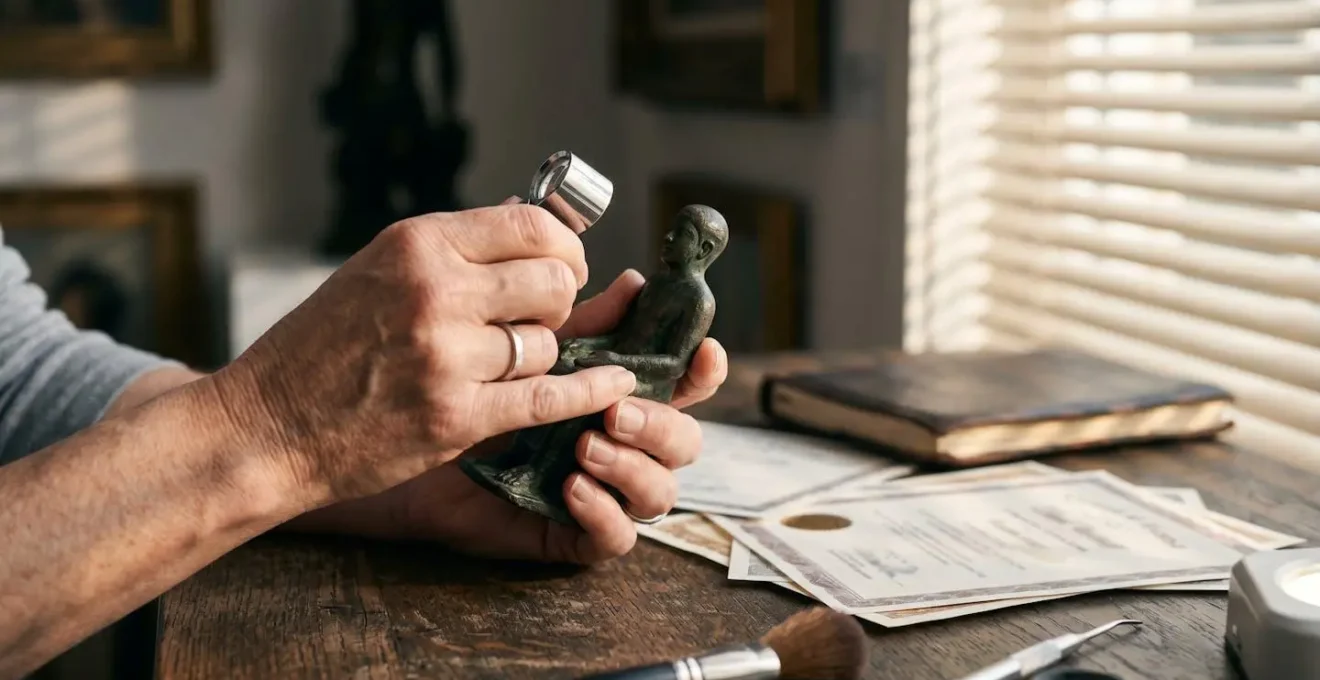
As the image suggests, this involves maintaining a professional apparatus, from detailed investment theses for each piece to formal business accounts. The goal is to prove to HMRC that the collection is managed with the same level of commercial intent and organisation as any other professional trading enterprise. This is the gateway to significant tax efficiencies.
The following checklist is based on the official guidance from HMRC’s Business Income Manual and outlines the key actions required to establish a collection as a business asset.
HMRC’s ‘Badges of Trade’: Your Compliance Checklist
- Document Profit-Seeking Motive: Maintain a detailed investment thesis for each acquisition, supplemented by market research reports and logs of gallery and auction visits.
- Establish Frequency of Transactions: Create a systematic pattern of buying and selling with regular, documented portfolio review cycles to demonstrate active trading.
- Structure Holding Period Strategically: Avoid exceptionally long-term holds that could suggest personal enjoyment over commercial trading intent.
- Demonstrate Business Organisation: Set up dedicated business bank accounts, secure professional storage facilities, and implement formal record-keeping and accounting systems.
- Evidence Modification of Assets: Document any processes that add value, such as professional restoration, scholarly research for re-attribution, or museum-quality framing.
- Show Similar Trading Activities: Connect the art dealing activity to other personal investment activities or professional expertise in related fields.
The Inheritance Tax Oversight That Forces Families to Sell Heirloom Paintings
Inheritance Tax (IHT) represents one of the most significant threats to the preservation of a family’s art collection. With the standard IHT rate at 40% over the nil-rate band, a valuable collection can create a substantial liability for beneficiaries, often forcing the sale of cherished artworks simply to settle the tax bill. This problem has been exacerbated by recent fiscal changes that have impacted reliefs previously available to business-held assets.
The issue became particularly acute following changes that affect Business Property Relief (BPR). As a leading law firm observed in its analysis of recent fiscal policy, the goalposts have moved for high-value collections. In their UK Acceptance in Lieu Scheme Analysis, legal experts highlighted a critical development:
The 2024 Budget introduced a 20% IHT charge on business assets over £1 million, meaning that artists’ families are suddenly facing substantially larger tax bills.
– Fieldfisher Law Firm
While this change specifically targets artists’ estates, it signals a broader tightening of reliefs that all collectors must heed. One of the most effective, yet often underutilised, strategies to mitigate this IHT liability is the Acceptance in Lieu (AIL) scheme. This government-run programme allows beneficiaries to pay IHT using artworks (and other heritage objects) instead of cash. The object is transferred to a public institution, and the tax liability is reduced by its agreed market value.
Crucially, the AIL scheme offers a powerful financial incentive. According to the Arts Council England, which manages the scheme, it provides a « douceur, » or sweetener. This means that a total value equivalent to 25% of the tax that would have been due is credited back to the estate. For example, on an artwork used to settle a £100,000 tax bill, the estate would receive a £25,000 credit, making it a far more attractive option than a forced sale on the open market.
EIS Schemes or Direct Purchase: Which Offers Better Relief for Art Investors?
When acquiring art as an investment, UK investors face a strategic choice between direct purchase of artworks and investing in art through a qualifying Enterprise Investment Scheme (EIS). An EIS allows investment into an unlisted company that trades in art, rather than owning the works directly. The decision carries significant and divergent tax implications, and the optimal route depends entirely on the investor’s specific financial objectives, risk appetite, and time horizon.
A direct purchase offers simplicity and full control. The investor owns the tangible asset and can sell it at any time, subject to market conditions. However, from a tax perspective, it is less efficient. There is no upfront income tax relief, and any gain upon sale is subject to Capital Gains Tax. For IHT, the artwork is fully part of the estate unless it qualifies for Business Property Relief (BPR), which requires satisfying the stringent « badges of trade » criteria.
Investing via an art EIS, by contrast, is a purely financial instrument designed with tax relief at its core. While the investor sacrifices direct ownership and liquidity (funds are typically locked in for at least three years), the tax benefits are substantial. These include up to 30% income tax relief on the amount invested, deferral of existing capital gains, and complete exemption from CGT on the sale of the EIS shares after three years. Furthermore, the investment typically qualifies for 100% IHT relief after being held for just two years.
To make an informed decision, it is essential to compare the tax implications directly. The following table, based on information from specialist art investment guides, provides a clear framework for evaluating these two paths.
| Aspect | EIS Art Investment | Direct Art Purchase |
|---|---|---|
| Income Tax Relief | Up to 30% of investment | None |
| CGT Deferral | Available on gains reinvested | No deferral option |
| CGT on Sale | 0% if held 3+ years | 18-24% (2024 rates) |
| IHT Relief | 100% after 2 years | 40% unless qualifying for BPR |
| Risk Profile | Business/equity risk | Market value fluctuation |
| Minimum Investment | Typically £10,000+ | No minimum |
| Liquidity | Limited for 3+ years | Can sell anytime |
When Should High-Net-Worth Individuals Transfer Artworks into a Trust?
For high-net-worth collectors, transferring artworks into a trust is a cornerstone of sophisticated estate planning. A trust legally separates the ownership of the art from the individual, effectively removing it from their estate for Inheritance Tax purposes after a seven-year period. However, the decision of *when* to initiate this transfer is critical and should be driven by specific financial and personal « trigger events » rather than arbitrary timing.
Acting at the right moment can vastly increase the tax efficiency of the transfer. For instance, placing an artwork into a trust before a major valuation increase—such as an upcoming museum retrospective for the artist or a milestone anniversary—can shield significant future appreciation from the IHT net. Similarly, for individuals with non-domiciled status, structuring a trust before their UK tax residency status changes can lock in substantial long-term benefits.
The transfer into a trust is also a powerful tool for asset protection, particularly in pre-nuptial planning. By placing high-value artworks into an irrevocable trust well in advance of a marriage, a collector can ensure they are ring-fenced from potential matrimonial asset division. The key is to see the trust not as a one-time solution, but as a strategic tool to be deployed in response to predictable life and market events.
The following are key trigger events that should prompt a high-net-worth individual to consider transferring art into a trust:
- Before a Major Valuation Increase: Transfer artworks prior to an event (e.g., a major exhibition, artist’s death) that is expected to significantly increase their market value.
- Changes in Domicile Status: Act before gaining or losing UK non-domiciled status to optimise the tax position under the relevant regime.
- Seven Years Before Retirement: Plan the transfer to ensure the seven-year clock for IHT exemption completes, passing the asset out of the estate while potentially retaining viewing rights through a formal agreement.
- Pre-nuptial or Succession Planning: Place art in an irrevocable trust to protect it from matrimonial claims or to ensure a smooth and tax-efficient transfer to the next generation.
- When Collection Value Exceeds BPR Caps: As tax reliefs like BPR become capped, trusts become an increasingly attractive alternative for sheltering the value of very large collections.
When Should You Leverage Your Art to Minimise UK Capital Gains Tax Exposure?
Capital Gains Tax (CGT) is a primary concern for any investor realising a profit from the sale of an artwork. Recent UK budgets have made this an even more pressing issue. Disposals of art by individuals are now taxed at 18% for gains falling within the basic-rate income tax band and 24% for those above it. Compounding this, a critical change has been the sharp reduction of the tax-free allowance. According to the latest guidance highlighted in collector tax resources, the annual CGT exemption is now just £3,000 for the 2024/25 tax year. This drastic reduction means that even modest gains are now likely to trigger a tax liability.
Given this stringent environment, active management of CGT exposure is essential. One of the most effective, yet often overlooked, strategies is « chattel loss harvesting. » Artworks, legally defined as « chattels, » can be sold at a loss to crystallise that loss for tax purposes. This realised loss can then be used to offset capital gains made from the sale of other chattels (including other artworks, antiques, or jewellery) within the same tax year. This turns an underperforming piece into a valuable tool for tax mitigation.
The strategic timing of disposals is therefore crucial. An investor planning to sell a highly appreciated artwork should first review their portfolio to identify any pieces whose market value has declined. By selling the loss-making piece in the same tax year, they can directly reduce the taxable gain from the profitable sale. It is also vital to remember that gifting an artwork to a connected person (other than a spouse or civil partner) is treated as a disposal at market value by HMRC, which can unexpectedly trigger a significant CGT charge based on the full appreciated value.
Leveraging art in this context does not mean borrowing against it, but rather using its status as a chattel within the CGT framework. It involves a disciplined, year-end review process to align disposals (both gains and losses) to make maximum use of the minimal £3,000 allowance and to ensure losses are harvested effectively to neutralise gains elsewhere.
When to Rebalance Your Art Holdings to Maximise Capital Gains Tax Efficiency?
Just as with a traditional stock portfolio, disciplined rebalancing is a sophisticated strategy to manage risk and optimise tax efficiency within an art collection. Rebalancing involves periodically selling certain appreciated assets and potentially acquiring others to maintain a desired allocation and risk profile. For the art investor, the « when » of rebalancing should be dictated by a combination of portfolio metrics and strategic tax planning, particularly concerning Capital Gains Tax (CGT).
A primary trigger for rebalancing is concentration risk. If a single artist or art movement comes to represent an oversized portion of the portfolio’s total value (e.g., over 30%), it exposes the collection to significant downside risk should that specific market segment decline. Periodically realising a portion of these gains—ideally timing the sale to fall within the £3,000 annual CGT exemption—is a prudent measure to diversify and lock in profits in a tax-efficient manner.
Another key strategy involves gifting. A powerful example of this is a « gift and lease-back » arrangement, a technique that can rebalance estate value without the collector losing the enjoyment of the artwork. A real-world application illustrates this perfectly:
A collector successfully implemented a ‘gift and lease-back’ arrangement within their family, gifting a £500,000 painting to an adult child (starting the 7-year IHT clock) while retaining display rights through a nominal lease agreement, effectively rebalancing estate value without losing enjoyment of the artwork.
– Family Gifting Strategy Example
This manoeuvre simultaneously addresses both CGT (by transferring the future gain) and IHT (by starting the seven-year clock). The following triggers should prompt a review and potential rebalancing of an art portfolio:
- Concentration Threshold Breach: When a single artist or category exceeds a pre-determined percentage (e.g., 30%) of the total portfolio value.
- Unrealised Gains Target: When an artwork or category shows unrealised gains exceeding a certain threshold (e.g., 50%), prompting consideration of a partial sale to lock in profits.
- Annual Tax Year Review: A systematic annual review to make strategic use of the £3,000 CGT allowance by realising small gains.
- Major Life Events: Impending events such as marriage, retirement, or emigration that have significant financial and tax implications.
Key Takeaways
- Active Management is Non-Negotiable: Treating an art collection as a dynamic business asset, not a passive hobby, is the foundation of all effective tax strategies.
- Structure Precedes Acquisition: The tax efficiency of an artwork is often determined before it is even purchased, by choosing the right vehicle (Direct Purchase, EIS, Trust).
- Tax Mitigation is Trigger-Based: The most effective strategies (e.g., transferring to a trust, harvesting losses, rebalancing) are deployed in response to specific market, legal, or personal events.
How to Unlock Instant Capital from Your Art Collection Using Digital Lenders?
A significant challenge for art collectors is that while their assets may be immensely valuable, that value is illiquid. Selling a piece to raise capital is a slow process and, crucially, a taxable event that triggers Capital Gains Tax. Art-backed lending provides a solution, allowing collectors to unlock instant capital without selling the asset. This financial manoeuvre is a non-recourse loan, meaning the artwork itself is the sole collateral; the lender has no claim on the borrower’s other assets.
Historically, this service was the exclusive domain of major auction houses and private banks, often involving high minimum loan values and lengthy processing times. However, the market has been transformed by the emergence of specialist digital lenders. These fintech platforms leverage technology for faster valuations and streamlined underwriting, making art-backed lending more accessible. They typically offer higher Loan-to-Value (LTV) ratios and quicker access to capital, opening this strategy to a wider range of collectors. The global art lending market has expanded significantly, becoming a multi-billion-dollar sector and demonstrating robust investor confidence.
The choice of lender depends on the collector’s needs regarding loan size, speed, and cost. Digital specialists are ideal for securing capital quickly on mid-range artworks, while private banks may offer more competitive rates for very large, multi-asset-backed facilities. This comparative data from an Art Basel market analysis provides an overview of the current lending landscape.
| Lender Type | LTV Ratio | Interest Rate | Processing Time | Minimum Loan | Terms |
|---|---|---|---|---|---|
| Digital Specialists (e.g., Athena, Artscapy) | 50-70% | Mid-single digits | 2-3 weeks | £100k-$2M | Non-recourse |
| Private Banks | 40-50% | 3-6% | 4-6 weeks | $1M+ | Full recourse |
| Auction Houses | 50% | Variable | 30 days | $2M+ | Tied to consignment |
Unlocking capital through an art-backed loan is a purely financial transaction. It is not a disposal, so it does not trigger CGT. This makes it a superior strategy for raising funds for other investment opportunities, managing short-term cash flow needs, or financing further art acquisitions, all while the original collection continues to appreciate in value.
The strategies outlined in this guide demonstrate that effective tax management of an art portfolio requires diligence, foresight, and specialist knowledge. To implement a personalised strategy that aligns with your financial goals and protects your legacy, seeking professional advice from a qualified art tax advisor is the essential next step.