The biggest threat to your profit when selling art isn’t the commission rate you negotiate; it’s the web of hidden fees and opaque practices you don’t even see.
- Elite dealers use « off-market » inventory to control price perception, making public data misleading.
- A Certificate of Authenticity is only as good as its issuer; validating the source is the real due diligence.
Recommendation: Stop focusing on the upfront percentage and start auditing the entire transaction chain, from buyer’s premium VAT to the validity of the authentication channel.
If you’re a collector looking to sell a significant piece, you’re entering a market that thrives on information asymmetry. The common advice—negotiate commissions, get everything in writing—is dangerously simplistic. It’s like telling a chess novice to « protect your king. » True, but useless against a grandmaster. The secondary market is dominated by veteran brokers and dealers whose primary job is to maximize their margin, often at your expense. They rely on a set of unwritten rules and contractual sleights of hand that the average seller never sees coming.
You’ll hear about the importance of provenance and fair commissions, but these are just the surface-level conversations. The real game is played in the shadows: in the consignment contract’s fine print, in the choice between a public auction and a discreet private sale, and in understanding why a gallery’s most prized assets never appear on its website. This isn’t about being cynical; it’s about being prepared. The standard approach leaves you vulnerable to paying for your own sale through a cascade of hidden costs.
But what if you could flip the script? The key isn’t to be more aggressive in your negotiation, but more knowledgeable. It’s about understanding the dealer’s playbook so you can counter their moves before they’re even made. This guide is built on that principle. We will dismantle the mechanics of the secondary market, moving beyond the platitudes to give you a structural advantage.
We’ll explore why the most desirable works are sold privately, how to conduct forensic due diligence on authenticity certificates, and how to spot the contract loopholes that quietly drain your returns. This is your playbook for turning a potentially exploitative transaction into a controlled, profitable, and professional liquidation of your asset.
This article provides a strategic roadmap for sellers. We’ll deconstruct the tactics used by secondary market agents to help you navigate negotiations, verify authenticity, and ultimately protect your investment. The following sections break down each critical stage of the process.
Summary: An Insider’s Guide to Negotiating the Secondary Art Market
- Why Do Elite London Dealers Keep Their Best Inventory Off the Public Website?
- How to Validate the Authenticity Certificates Provided by Broker Intermediaries?
- The Consignment Contract Loophole That Costs Sellers 20% in Hidden Fees
- Auction House or Private Dealer: Which Guarantees Faster Liquidity for Sellers?
- When is the Right Moment to Bypass a Dealer and Contact the Artist Directly?
- When to Request a Discount on Contemporary Canvas Pieces Without Offending?
- How to Calculate the True Cost of a £10k Artwork After Hidden Buyer Premiums?
- How to Win High-Value Contemporary Art on Online Portals Without Overpaying?
Why Do Elite London Dealers Keep Their Best Inventory Off the Public Website?
The first rule of the high-end secondary market is that the best works are invisible to the public. Elite dealers in hubs like London, New York, and Hong Kong curate a « shadow inventory » reserved for their most trusted clients. This isn’t just about creating an aura of exclusivity; it’s a calculated business strategy. Publicly listing a high-value piece affixes a digital price tag and a timestamp to it. If it doesn’t sell quickly, the work can become « burned »—perceived as undesirable or overpriced, damaging its future market value. Keeping it offline avoids this risk entirely.
This private dealing also serves to protect the primary market, especially for living artists. A public secondary sale that undercuts the artist’s current gallery prices can disrupt their entire pricing structure. By handling the sale discreetly, dealers maintain market stability and keep the artist’s primary gallery happy. This trend is accelerating; as the public market faces headwinds, private sales are booming. In fact, one report noted a 14% increase in private sales at auction houses in 2024 alone, proving that discretion is now the preferred route for significant transactions. For a seller, this means your most powerful leverage is gaining access to this hidden ecosystem, which requires a broker with a deep network.
The core reasons for maintaining a private inventory can be broken down into four strategic pillars:
- Price Discretion: Avoiding the creation of a public price history that could devalue an unsold work or set a precedent that is too low.
- Manufacturing Exclusivity: Creating a « treasure hunt » dynamic that increases the perceived value and urgency for a select group of vetted collectors.
- Protecting the Primary Market: Preventing the disruption of a living artist’s carefully managed pricing structure set by their representing gallery.
- Testing the Waters: Gauging interest and potential price points from a small circle of trusted collectors before committing to a public sales strategy.
As a seller, you must accept that you won’t find the right buyer through a simple web search. Your success depends on your agent’s ability to penetrate these exclusive circles.
How to Validate the Authenticity Certificates Provided by Broker Intermediaries?
In the secondary market, a Certificate of Authenticity (COA) is often presented as the final word on a work’s legitimacy. This is a dangerous assumption. A COA is only as credible as its issuer. An unscrupulous broker can provide a certificate from a questionable « expert » or a gallery with no standing. Your job isn’t just to receive the paper; it’s to perform provenance forensics. This means investigating the issuer of the certificate with the same rigor you apply to the artwork itself. Is the authenticator a recognized scholar on the artist? Is the issuing body the sole designated authority?
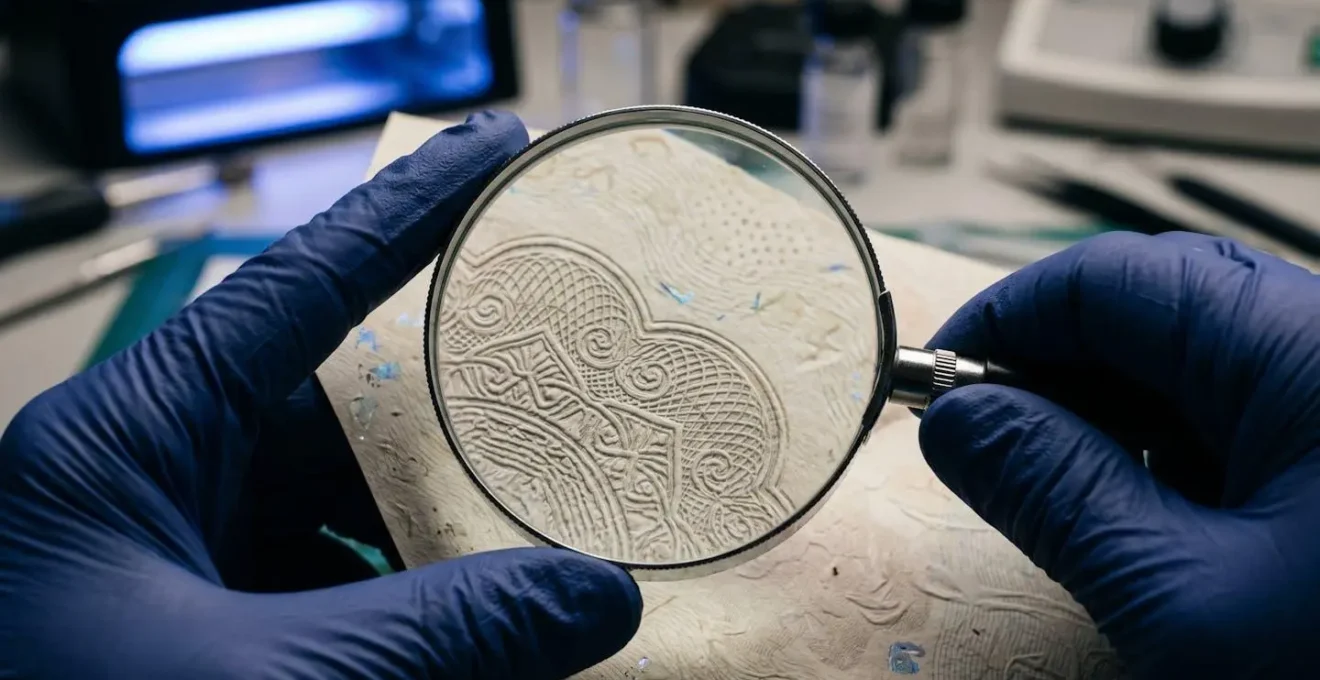
As the image above suggests, this is a forensic process. True validation involves cross-referencing the certificate with the artist’s official catalogue raisonné, contacting the artist’s estate, or using the designated authentication body. Failure to do so can be catastrophic. An artwork with flawed provenance is effectively worthless, regardless of its aesthetic merit. You must demand documentation that traces the chain of ownership back to the artist’s studio and verify every link in that chain.
Case Study: The Banksy « Pest Control » Mandate
A perfect example of a centralized, non-negotiable authentication channel is Banksy’s « Pest Control Office. » Established in 2008, it is the only body in the world authorized to authenticate his works. As MyArtBroker explains, without a Pest Control COA, a Banksy piece is not recognized on the secondary market. They charge a fee for this service (£100-£150), which is a small price to pay for certainty. This model demonstrates the critical importance of identifying and using the single, official channel for verification, rendering all other « expert opinions » irrelevant.
Treat every certificate provided by an intermediary with professional skepticism. Your guiding principle should be to trust, but verify—or, more accurately, don’t trust until you have independently verified.
The Consignment Contract Loophole That Costs Sellers 20% in Hidden Fees
The commission percentage you negotiate with a dealer is just the tip of the iceberg. The most significant costs are often buried in the consignment contract and the complex structure of auction house fees—a practice I call fee stacking. While the seller agrees to a commission (e.g., 10-15%), the buyer is simultaneously hit with a « Buyer’s Premium, » a percentage added on top of the winning bid (the hammer price). This premium can be as high as 26% on the first tier of value. This directly impacts the seller.
Why? Because sophisticated bidders factor the premium into their maximum bid. If they’re willing to spend £12,600 in total, they won’t bid a penny over £10,000 at a 26% premium. The Buyer’s Premium artificially suppresses the hammer price, and your commission is calculated on that lower number. But it gets worse. Additional costs like VAT on the premium, shipping, insurance, and Artist’s Resale Right (ARR) are piled on. Ultimately, as artnet Auctions specialists explain, it’s not uncommon for these stacked fees to mean that nearly 30% of the total money paid by the buyer never reaches the seller.
The most dangerous loophole in a consignment contract is ambiguity around « net amount. » Your contract must explicitly state that your percentage is calculated on the hammer price, and you must be aware of all deductions that will be taken from your final payment. Insist on a clear statement of costs that outlines every potential fee, from photography to marketing.
| Price Range | Christie’s/Sotheby’s | Phillips | Impact on £10k Work |
|---|---|---|---|
| First Tier | 26% (up to £600k) | Variable with early bid discount | £2,600 added |
| Second Tier | 20% (above £600k) | Higher for last-minute bidders | N/A for £10k |
| Hidden Costs | VAT on premium | VAT on premium | Additional 20% on premium |
Before signing anything, demand a pro-forma invoice showing a hypothetical sale at your target price, with every single fee and tax itemized. If the broker resists, walk away.
Auction House or Private Dealer: Which Guarantees Faster Liquidity for Sellers?
When you need to sell, the choice between a public auction and a private sale through a dealer presents a classic risk/reward trade-off. The allure of an auction is the potential for a bidding war to drive the price into the stratosphere. However, it’s a high-wire act. If the work fails to meet its reserve price, it is publicly « burned, » making it significantly harder to sell later. An auction also locks you into a rigid, months-long calendar. This is not fast liquidity; it is scheduled, high-risk liquidity.
A private dealer, by contrast, offers controlled liquidity. The process is discreet, shielding the work from public failure. You and your agent control the timing, the asking price, and the list of potential buyers. While you might forego the slim chance of a record-breaking auction result, you gain immense control and eliminate downside risk. This method allows for a more strategic, patient approach, engaging with a handful of highly qualified collectors until the right offer is made. The transaction can often be completed much faster than the auction cycle if a motivated buyer is already in the dealer’s network.
The market itself is voting for privacy. As major auction houses build out their private sales divisions, it’s clear where high-value collectors and sellers are migrating for security and discretion.
Market Trend: Private Sales Outpace Public Auctions
The shift towards discretion is not just anecdotal; it’s backed by hard data. According to The Art Market 2024 report by Art Basel and UBS, while global public auction sales declined significantly year-on-year, private sales conducted by those same auction houses surged. This demonstrates a clear preference among high-net-worth individuals for the control, privacy, and pricing power that private transactions offer, especially in an uncertain economic climate. Sellers are increasingly choosing the certainty of a quiet deal over the spectacle of a public sale.
For most sellers of significant works, the goal is not to gamble but to execute a successful sale. In that context, the discretion and control of a private deal are almost always the superior strategic choice.
When is the Right Moment to Bypass a Dealer and Contact the Artist Directly?
The temptation to cut out the middleman and approach an artist directly is strong, especially when you see commissions eating into your potential profit. However, this is a move fraught with peril and should almost never be done. The art world operates on a strict, though unwritten, code of conduct. A dealer or gallery invests significant time and resources into building an artist’s career. Bypassing them is seen as a major breach of protocol and can get you blacklisted not just by that gallery, but by the wider industry. Word travels fast.
There are, however, a few very specific and rare scenarios where direct contact is permissible. The most common is when commissioning a new piece of work, not for a secondary market sale of an existing piece. Even then, the initial approach should often go through their representing gallery. Other exceptions include situations where an artist is an « orphan »—their gallery has closed, or they have been formally dropped from the gallery’s roster. In this case, the artist effectively becomes their own primary dealer.

The only other justifiable reason for direct contact regarding a secondary sale is as a last resort for provenance verification. If you have exhausted all other channels (gallery records, catalogue raisonné, estate) and have a specific factual question about a work’s history, a polite, well-researched inquiry to the artist or their studio might be acceptable. But it should never be a negotiation.
- Commission vs. Secondary Sale: Only contact an artist directly to inquire about commissioning a new work, never to negotiate the sale of an existing one.
- « Orphaned » Artist Exception: Direct contact is acceptable if the artist’s representing gallery has closed or has officially terminated their representation.
- Last Resort for Provenance: A direct query is permissible only for specific, factual verification of a work’s history after all other sources have been exhausted.
- Risk Assessment: Always understand that inappropriate contact is a fast track to being blacklisted by the gallery ecosystem.
In 99% of cases, the answer is simple: don’t do it. The commission you pay your dealer is for their network, their market knowledge, and their protection of the very relationships you might be tempted to break.
When to Request a Discount on Contemporary Canvas Pieces Without Offending?
While this guide is for sellers, understanding the buyer’s mindset is critical. Buyers often wonder about discounts, and you need to know what your agent will be up against. The gallery world has an established etiquette around negotiation. While prices for contemporary art often have some flexibility, it’s a delicate dance. A blunt « Will you take less? » can be seen as unsophisticated. The expectation is for a more nuanced approach. However, don’t be mistaken—negotiation is expected.
The key for a buyer is to signal serious intent before broaching the subject of price. A collector who has done their research, understands the artist’s market, and has a history with the gallery is in a much stronger position. As Artsy Specialists advise, the language used is crucial. Instead of demanding a discount, a collector should inquire politely.
Consider approaching the subject by asking: ‘Is there a collector discount?’ or ‘Is the price negotiable?’ Galleries expect buyers to push back on price, so do not hesitate to ask.
– Artsy Specialists, How to Talk Price with a Gallery
That said, sellers should have realistic expectations. Discounts are not a given, and they are rarely substantial. In fact, data from Xanadu Gallery reveals that only 14% of gallery sales involve a discount, with the average reduction being around 12%. This tells sellers that holding firm on price is often a viable strategy, especially for in-demand works. The idea of a standard 10-20% discount is largely a myth; it’s a tool reserved for valued, repeat clients or to close a deal that has stalled.
As a seller, this knowledge empowers you to instruct your agent. You can set firm boundaries on discounting, armed with the knowledge that it is not standard practice but a strategic concession.
How to Calculate the True Cost of a £10k Artwork After Hidden Buyer Premiums?
For both buyers and sellers, the « hammer price » is a misleading number. The true cost for the buyer—and therefore the true context of the seller’s return—is a figure inflated by a litany of additional charges. Understanding this calculation is the single most important piece of financial due diligence you can perform. A £10,000 hammer price does not mean the artwork costs £10,000. In reality, the final invoice can be 30-40% higher once all fees are stacked on top.
The first addition is the Buyer’s Premium, which at major auction houses is typically 26% for works up to around £600,000. Next comes the VAT, which is charged *on the premium*, not the artwork itself (in most cases). Then, if the artist is living or died within the last 70 years, the Artist’s Resale Right (ARR) applies, which is a tiered percentage of the hammer price. Finally, you have to account for shipping, insurance, and potential installation costs, which can add another significant percentage. These are not optional extras; they are integral parts of the final cost.
This fee structure is becoming more complex, with some houses creating dynamic models. For instance, Phillips’ new November 2024 fee structure shows that early bidding is now rewarded with a lower buyer’s premium, a move to incentivize activity. This proves that you must audit the *current* fee schedule for every transaction.
Your 5-Step Audit for True Artwork Cost
- Start with Hammer Price: Begin with the agreed-upon sale price before any fees (e.g., £10,000). This is your baseline.
- Add Buyer’s Premium: Add the auction house or dealer’s premium. For a £10,000 work, this is typically 26%, adding £2,600.
- Calculate VAT on Premium: Apply VAT (currently 20% in the UK) to the premium amount. 20% of £2,600 is £520.
- Factor in Artist’s Resale Right (ARR): If applicable, add the ARR. For a £10,000 work, this is 4%, adding another £400.
- Estimate Ancillary Costs: Add a conservative estimate for shipping, insurance, and framing/installation, often 5-10% of the hammer price (£500-£1,000). The true cost now exceeds £13,520.
By mastering this math, you move from being a passive price-taker to an informed financial actor who understands the real economics of the transaction.
Key Takeaways
- The secondary art market’s real mechanics operate offline, where « shadow inventory » and private sales dictate true value.
- A Certificate of Authenticity is worthless without forensic validation of its issuer; trust only official, centralized authentication bodies.
- « Fee stacking »—layering Buyer’s Premium, VAT, and other costs—is the primary way margins are eroded, making the negotiated commission only a small part of the total cost.
How to Win High-Value Contemporary Art on Online Portals Without Overpaying?
While the top of the market remains discreetly offline, the segment for works under $50,000 has exploded onto online auction portals. This « democratization » presents opportunities, but it’s a battlefield with its own rules of engagement. Here, you’re not just bidding against other collectors but also against automated proxy bids, last-second « snipers, » and sometimes even phantom « chandelier » bids placed by the auctioneer to stimulate activity. Winning without overpaying requires a clear strategy.
The fastest-growing segment online is for lots under $10,000, which now represents the vast majority of all art offered at auction worldwide. This is a space driven by volume and speed, where emotional, reactive bidding is common and costly. A savvy participant must decide on their bidding strategy *before* the auction begins and stick to it with discipline. This means choosing a persona: Are you an « early intimidator » who places a strong bid to scare off competition, or a « last-second sniper » who hopes to win before anyone can react? Each approach carries distinct risks and rewards.
Understanding the different strategies is key to navigating these platforms effectively. The goal is not just to win the piece but to win it at a price that reflects its true market value, avoiding the frenzy of a bidding war.
| Strategy | Advantages | Risks | Best For |
|---|---|---|---|
| Last-Second Sniping | Prevents bidding war | Technical failure risk | Experienced bidders |
| Early Intimidation | Discourages competition | Shows your hand early | Well-funded buyers |
| Proxy Bidding | Avoids emotional overbidding | May lose to manual bidder | Disciplined collectors |
| Chandelier Awareness | Avoids fake competition | Requires market knowledge | Savvy investors |
Ultimately, your best defense against overpaying online is the same as it is offline: do your homework, set a firm maximum price based on fundamentals, and have the discipline to walk away if the cost exceeds your valuation.